

· AFX Research
Tax Liens on Marital Property: What a Divorce Search Shows
Federal, state, and local tax liens reach marital property in different ways. What a records search finds for each, whose name to search, and what it cannot show.
Table of Contents
Tax liens are the quietest item on a marital balance sheet. A judgment usually arrives with a lawsuit somebody remembers; a tax lien often arrives because a business filed late for three years, and the spouse who did not run the business finds out about it during a property division. The mechanics differ from the ordinary encumbrances covered in our note on liens against marital property, and the difference matters at intake, because it changes what you have to search.
Three kinds, and two different searches
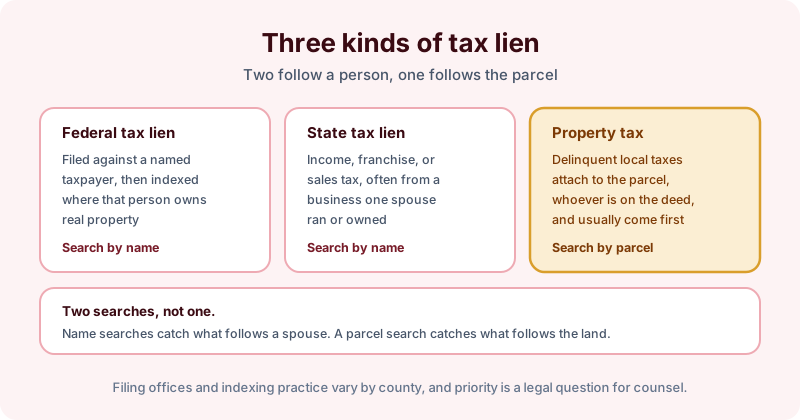
Federal tax liens are filed against a named taxpayer. They are found by searching that name in the office where such notices are filed for real property in that jurisdiction, which means the name has to be right and the aliases have to be included.
State tax liens work similarly and cover a wider range of taxes — income, franchise, sales, employment — and they are frequently the ones tied to a closely held business. A spouse who was an officer or a member of an LLC may appear in filings that have nothing to do with the house.
Delinquent property taxes are the exception, and they behave differently. They attach to the parcel itself rather than to a person, they follow the land regardless of whose name is on the deed, and in most jurisdictions they take priority over almost everything else. Nobody has to be sued and nothing has to be filed against an individual for the county to have a claim against the property.
So there are two searches here, not one. A name search finds what follows a spouse. A parcel search finds what follows the land. Skipping either leaves a hole.
There is a filing-office wrinkle worth knowing about. Where a tax lien notice gets filed is set by state law and is not always the county recorder. Some states send them to a central registry, some to the county where the taxpayer resides rather than where the property sits, and a spouse who moved twice during the marriage may have filings in three places. That is why the counties to search are a scoping question rather than an obvious one.
When the debt belongs to one spouse
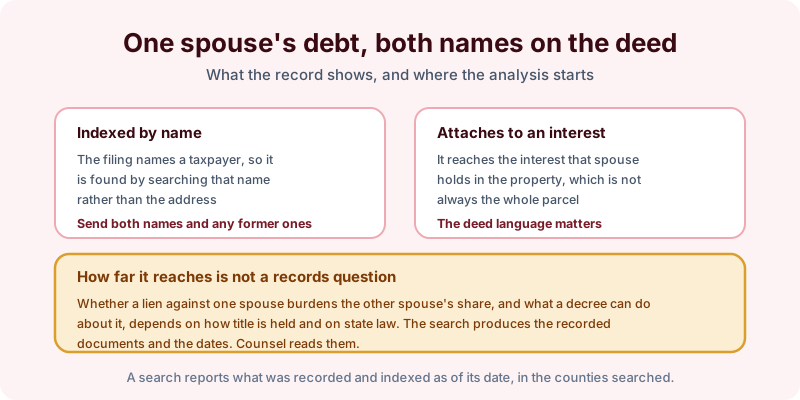
This is where the interesting questions live, and where the abstractor’s job stops. A lien filed against one spouse reaches the interest that spouse holds in property. How much of a jointly held parcel that burdens, what a decree can and cannot do about it, and whether a non-liable spouse has any protection are questions that turn on how title is held and on state law — the same split described in our note on community property versus equitable distribution. Those are legal conclusions for counsel, not findings in a search.
What the search does is produce the raw material: the recorded notice, the date, the amount stated, the taxpayer named, and any release or withdrawal filed afterward. A negotiation runs on those documents rather than on a summary of them.
What the search will and will not settle
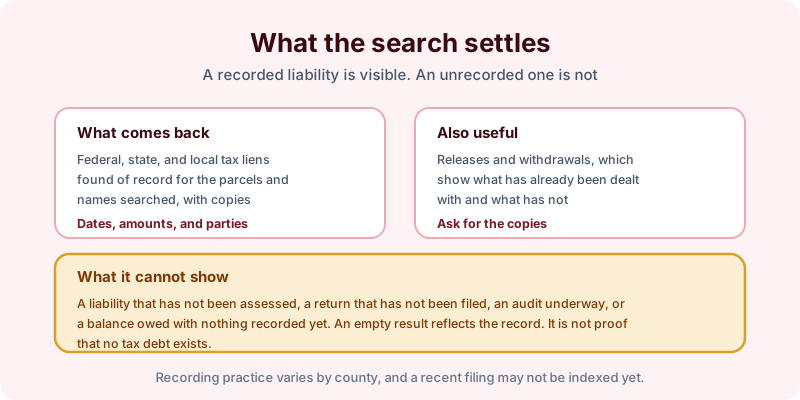
A search reports the tax liens found of record for the parcels and names searched, as of its date, with copies. It also reports releases, which is how you tell an old problem from a live one.
It cannot show a liability that has not been assessed, a return that has not been filed, an audit in progress, or a balance owed with nothing recorded yet. That gap is real and it is often exactly where the risk sits, so an empty result reflects the record rather than proving no tax debt exists. Recording and indexing practice varies by county, and a recent filing may not be indexed at the time of the search.
The takeaway
Send both names, including former and business names, plus every parcel, and ask for the parcel-level tax status alongside the name searches. Then let counsel read the documents against the decree. Our process page explains what happens at intake, and more information covers scope. Start the order online, or send us the names and addresses and we will tell you what a search of that scope would and would not cover before anything is ordered.