

· AFX Research
Community Property States: What the Deed Alone Cannot Settle
How the two systems states use to divide property differ, why the state where the land sits governs, and which recorded facts both approaches need from the county index.
Table of Contents
Ask which state a divorce is filed in and you learn something about how property will be divided. Ask which state the property sits in and you learn something different, and on real estate the second question is often the one that governs. Neither answer is visible in the county index, which looks the same in Phoenix as it does in Philadelphia. What the index supplies is the dated facts underneath the argument, and both systems run on the same ones.
Two systems, one county index
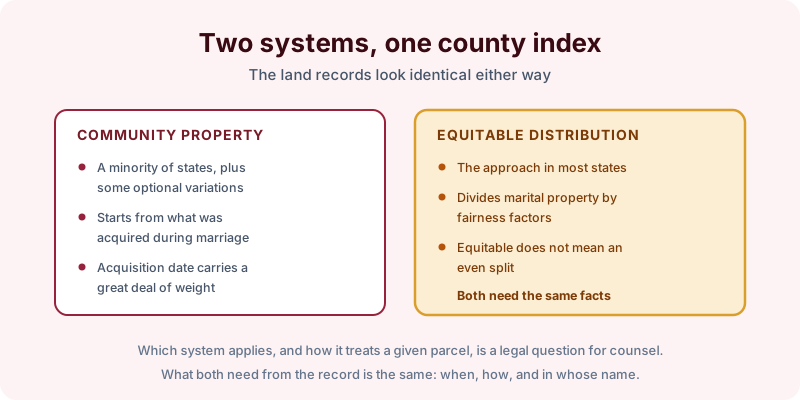
A community property state starts from the character of what was acquired during the marriage, and the date of acquisition therefore carries real weight. A handful of states use this system, and a few others offer optional variations on it.
Most states use equitable distribution, which identifies marital property and divides it according to a list of fairness factors. Equitable does not mean equal, and two courts in the same state can reach different splits on similar facts.
Which system applies to your matter, and how it treats a particular parcel, is a legal question for counsel. The point worth making here is that both systems ask the record for the same things: when the property came in, how it was acquired, in whose name, and what has been recorded against it since. Our note on marital versus separate property covers that boundary in more detail.
Where the land is, not where you live
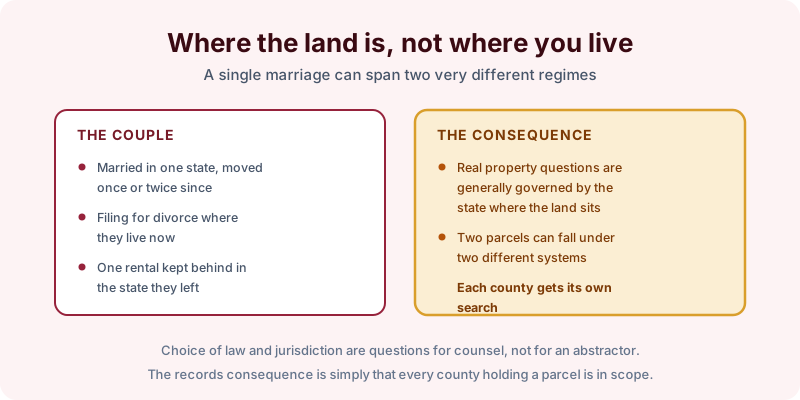
Here is the practical wrinkle that catches people who assume one state’s rules cover everything they own. Questions about real property are generally governed by the law of the state where the land sits. A couple who married in Texas, moved to Illinois, and kept a rental behind can end up with parcels sitting under different regimes inside a single marriage.
Choice of law is counsel’s territory and it can get genuinely complicated. The records consequence is simple and it is the part we can act on: every county holding a parcel needs its own search, because land is indexed only where it sits. There is no national index to query, and coverage is built county by county from a list of names and places.
The words the deed actually uses
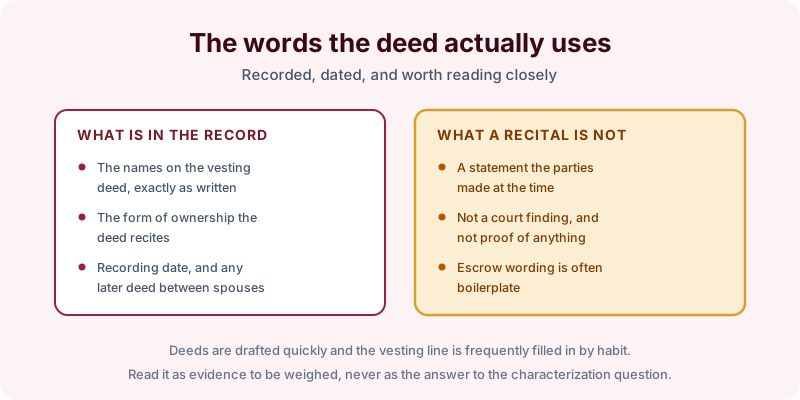
Vesting language is the part of a deed people read closest in these files, and it deserves a caution.
What the record gives you is solid: the names on the vesting deed exactly as written, the form of ownership the deed recites, the recording date, and any later deed between the spouses. Those are facts with dates attached, and they are copyable.
What a recital is not is a determination. When a deed states that a spouse takes property as sole and separate, that is a statement the parties made at the time, frequently drafted at speed by an escrow officer working from habit. It is evidence, and it can be weighed against everything else, including who paid and what happened afterward. A quitclaim deed between spouses raises the same issue from the other direction. Treating a recital as the answer is the single most common way one of these reports gets over-read.
Scoping it properly
Send both spouses’ names with every variant either has used, and the counties where property might sit rather than only the county of residence. Where a trust or an entity may hold the property, that search runs against the entity instead of the person. Our products page lists the available scopes.
Then read the result for exactly what it is. It reports what was found of record in the counties searched, on the date searched. Recording and indexing practice varies by county, a search is never a complete inventory of what someone owns, and an empty result does not prove nothing exists.
The takeaway
Identify which state governs each parcel before drawing conclusions from a single deed, search every county where property might sit, and treat vesting language as dated evidence rather than as a finding. Start the order online, or send us the names and addresses and we will tell you what a search of that scope would and would not cover before anything is ordered.