

· AFX Research
Liens Against Marital Property: Judgments, Taxes, and Support
What can be filed against a marital home, which encumbrances follow the parcel instead of the person, and why the timing of the search changes the settlement.
Table of Contents
Dividing a house means dividing what is attached to it, and quite a lot can be attached without either spouse thinking about it for years. Liens do not come up in settlement talks because nobody remembers them; they come up at the next refinance, when a payoff figure arrives with an extra line on it. A search run before the agreement is drafted turns that into a number both sides can see. Once the deed has recorded, as our guide to quitclaim deeds covers, the encumbrances are still there and only one person is holding them.
What can actually be filed
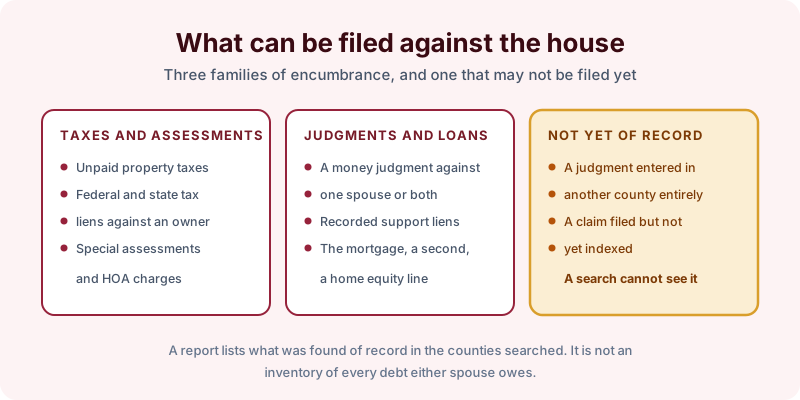
The families are familiar once laid out. Taxes and assessments: unpaid property taxes, federal and state tax liens against an owner, special assessments, HOA charges. Judgments and support: a money judgment against one spouse or both, and in some states a recorded support lien. Voluntary loans: the first mortgage, a second, a home equity line drawn on quietly during a thin year.
The one that catches people is a judgment entered somewhere else. A creditor who sued in the county where a spouse works, and never docketed the judgment in the county where the house sits, has a judgment that a search of the property county will not show. Which counties get searched is therefore a real decision, not a formality.
Following the parcel, or following a person
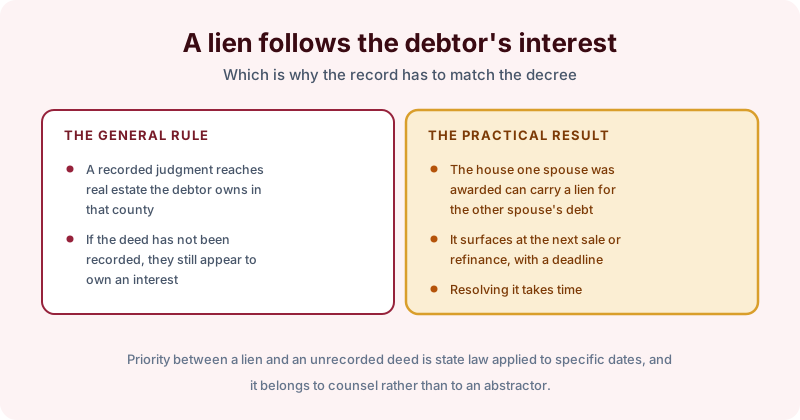
A mortgage, a property tax lien, and a mechanics lien for work done on the house attach to the parcel. They stay of record against it regardless of which spouse ends up on the deed, and a transfer between spouses does nothing to them.
A judgment against one spouse individually behaves differently, and this is where general statements stop being safe. Depending on the state, how title was held, and whether any homestead protection applies, such a judgment may reach only that spouse’s interest, or may encumber more than that. A report tells you what was filed, against whom, and on what date. How far it reaches into jointly held property is a question for an attorney licensed where the property sits.
Paid is not the same as released
A lien that has been satisfied does not leave the record on its own. It leaves when a release, satisfaction, or reconveyance is recorded. If nobody followed up at the time, a debt paid in 2014 can still sit on a report today, and clearing it means locating the release or having a new one recorded.
This is worth checking deliberately rather than assuming. A stale lien is cheap to clear while both spouses are still cooperating and have the old paperwork, and expensive to clear years later when one of them needs a signature from someone who has stopped answering.
The same problem appears with a mortgage that was refinanced. The new loan pays off the old one, but the release of the original has to be recorded separately, and if the closing agent never followed through, the record shows two mortgages where only one debt exists. Both will appear on a report, correctly, because both were filed and only one was released.
Why the timing decides the outcome
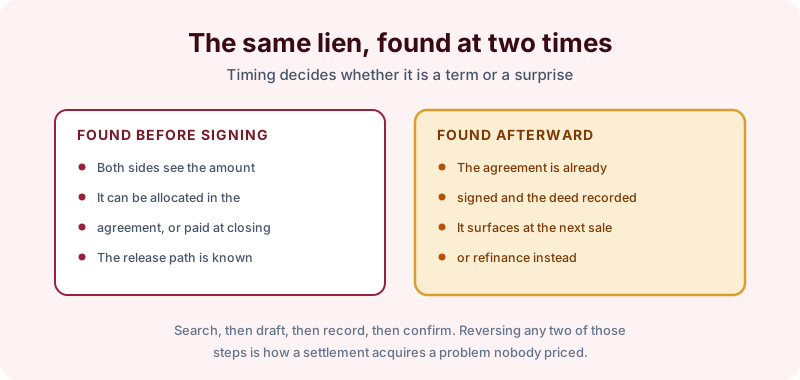
The same lien is a different object depending on when it surfaces. Found before signing, it is a figure that can be allocated in the agreement or paid at closing, with the release path understood. Found afterward, it belongs to whoever kept the house, and it usually surfaces at the worst moment, when a sale or refinance is already in motion.
None of this makes a report an inventory of what either spouse owes. It lists what was found of record in the counties searched, on the date searched. Debts with nothing filed against the property are invisible to it, and an empty result does not prove there are none. Our products page sets out which scope covers what.
The takeaway
Search before drafting, include every county where either spouse holds property, and read the report for releases as carefully as for liens. Start the order online, or send us the names and addresses and we will tell you what a search of that scope would and would not cover before anything is ordered.