

· AFX Research
What a Solar Panel Lease or Lien Means for the Marital Home
Whether rooftop solar is owned, leased, or financed through the tax bill changes who owes what after the house transfers, and the recorded documents are where you find out which.
Table of Contents
Solar panels rarely make it into a property settlement discussion until late, and then they make it in awkwardly. One spouse is keeping the house, the panels are on the roof, and nobody can say whether they are an asset, an obligation, or both. The answer is in the paperwork rather than on the roof, and part of that paperwork is recorded against the parcel, which puts it inside the same search that turns up liens against marital property.
Three arrangements that look identical from the street
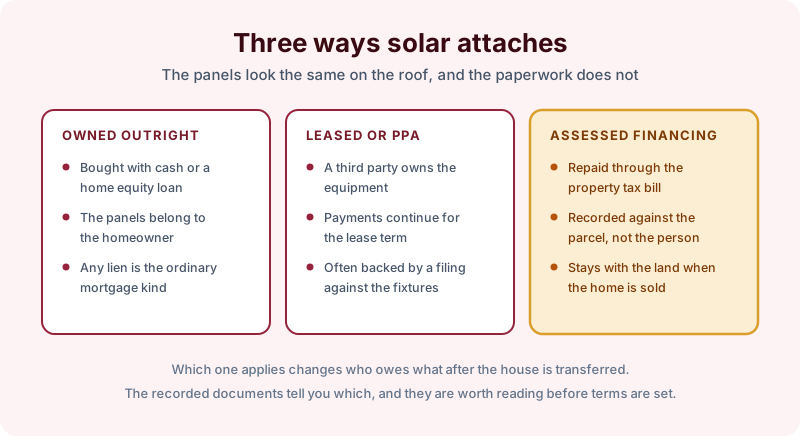
Owned. The system was bought with cash or with a home equity loan. The panels belong to the homeowner, and any debt behind them is an ordinary loan that may or may not be secured against the house.
Leased, or under a power purchase agreement. A third party owns the equipment and the homeowner pays monthly, either for the hardware or for the electricity it produces. These agreements commonly run fifteen to twenty five years, and the provider often protects its interest with a filing covering the panels as fixtures.
Financed through an assessment. Some programs let the cost be repaid as a charge added to the property tax bill. That charge is recorded against the parcel rather than against a person, and it is the one arrangement in this list that does not care who is on the deed.
The distinction is worth drawing early, because the three lead to completely different settlement conversations. Owned panels are an asset to be valued. A lease is a long running obligation that has to be assigned to somebody. An assessment is closer to a tax lien on marital property, in that it attaches to the land and simply waits there.
What the county record will tell you
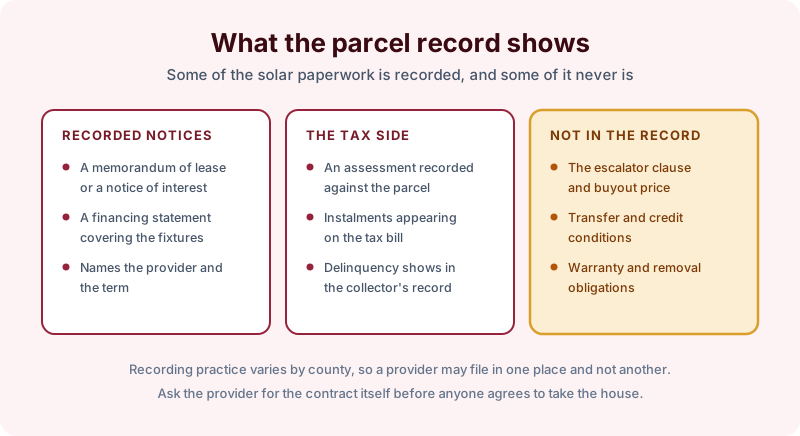
A search of the parcel can surface a memorandum of lease or notice of interest naming the provider, a financing statement covering the equipment, and any assessment recorded against the property. It can also show whether the tax installments are current, since delinquency appears in the collector’s records, and it will attach copies of whatever was filed so both sides are reading the same documents rather than describing them to each other.
What it will not give you is the contract. Escalator clauses, buyout prices, transfer conditions, credit requirements for an assuming party, and removal obligations all live in a document the recorder never received. Recording practice also varies by county, so a provider that files a notice in one place may file nothing in another, and finding no recorded notice is not proof there is no agreement. Ask the provider for the contract itself.
The transfer is where it becomes a real problem
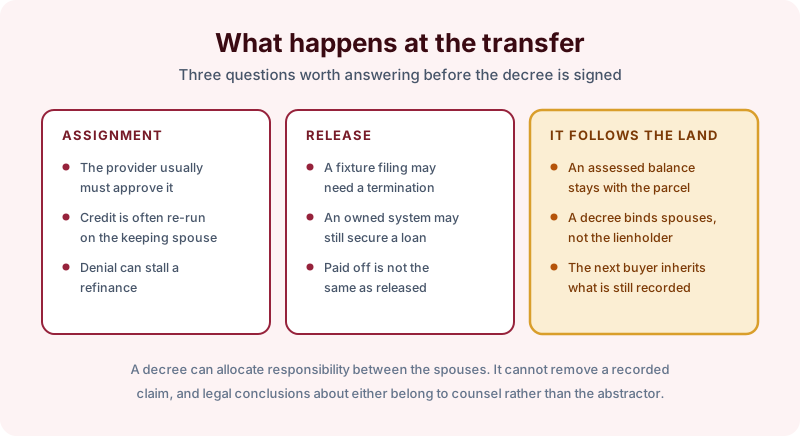
If the system is leased, the provider usually has to approve an assignment, and it will often re-run credit on the spouse keeping the house. A refusal can stall a refinance, which is inconvenient if the settlement assumed the refinance would happen. If a filing covers the panels as fixtures, it may need a termination, and a balance being paid off is not the same as the record being cleared.
If the cost sits on the tax bill, it stays with the parcel. A decree allocates responsibility between two spouses, and it does not bind the party holding a recorded claim. Whoever ends up with the house ends up living with whatever is still on the record, which is the same principle at work in refinancing the marital home.
The takeaway
Find out which of the three arrangements you are dealing with before terms are agreed, because each one lands somewhere different when the house transfers. The recorded documents identify the provider, the filings, and any assessment, and the contract fills in the rest. Legal conclusions about how it should be divided belong to counsel. Start the order online, or send us the address and the county and we will tell you what a search of that scope would and would not cover before anything is ordered.