

· AFX Research
A Deceased Ex-Spouse Still on the Deed: What the Record Shows
How an unrecorded transfer becomes an estate problem, what the vesting language on the old deed decides, and what to pull before anyone tries to clear title.
Table of Contents
Years pass, and then someone tries to sell or refinance. The title work comes back naming a former spouse who died in 2019, and the seller is holding a divorce decree that awarded them the house outright. This is one of the most common defects we see in post-divorce property, and it is almost always the result of a small omission: the decree said what should happen, and nobody ever recorded a deed. Our post on a divorce decree versus a deed explains why those are two different things.
Why the name is still there
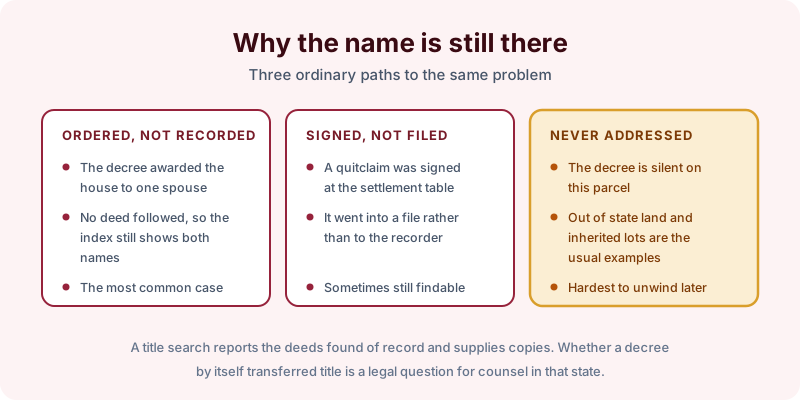
There are three ordinary routes to this situation. The decree ordered a transfer that never got recorded, which is by far the most common. A quitclaim was signed but never filed, sitting in a settlement folder where it does nothing for the record. Or the decree never addressed the parcel at all, which happens most often with out-of-state land, a vacant lot, or property that arrived by inheritance during the marriage. Our post on out-of-state property covers why those parcels get overlooked.
Each route leaves the county index showing two owners. Whether the decree by itself moved title, or whether some states treat a recorded decree as a conveyance, is a legal question that depends on the state and on how the decree was drafted. That determination belongs to counsel, not to an abstractor.
What death changes
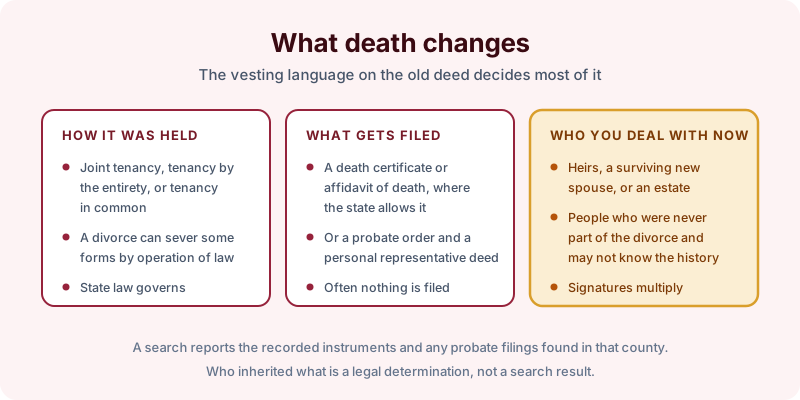
The vesting language on the original deed does most of the work here. Joint tenancy with right of survivorship, tenancy by the entirety, and tenancy in common produce very different outcomes on a death, and a divorce can sever some of those forms by operation of law in some states while leaving them intact in others. The exact words on the deed are therefore worth reading rather than assuming.
What was filed after the death matters just as much. Some states allow an affidavit of death or a recorded death certificate to clear a survivorship interest. Others require a probate order and a personal representative’s deed. Frequently nothing at all was filed, which is why the parcel still looks the way it looked in 2010.
The practical consequence is that the counterparty has changed. Instead of negotiating with an ex-spouse, the surviving owner may now need signatures from heirs, a later spouse, or an estate representative, none of whom were part of the divorce and some of whom may not know the history. Our post on inherited property in a divorce covers the related situation from the other direction.
What to pull before you fix it
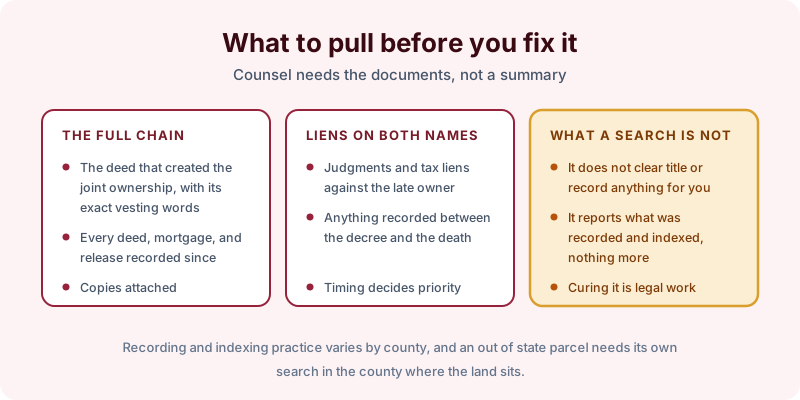
Counsel needs documents, not a summary. That means the deed that created the joint ownership with its exact vesting words, every deed, mortgage, assignment, and release recorded since, and any probate or estate filing that shows up in that county. It also means lien work on both names, because a judgment or tax lien recorded against the late owner between the decree and the death may still attach to the interest that is now in question. Our post on judgment liens recorded after the decree covers that timing problem.
Two limits are worth stating plainly. A records search reports what was recorded and indexed in that county, and an empty result is not proof that nothing exists, particularly where probate happened in a different county or state. And a search does not cure anything. Curing this defect takes a corrective deed, an affidavit, a probate proceeding, or a quiet title action, and choosing among them is legal work.
The takeaway
An unrecorded transfer is a small problem while both parties are alive and a much larger one afterward. If you hold a decree awarding you property and the record still shows a former spouse, get the chain and the liens documented now, while the people who can sign are available to sign. If the ex-spouse has already died, the same documents are the starting point for whatever cure your attorney recommends.
Start the order online, or send us the names and addresses and we will tell you what a search of that scope would and would not cover before anything is ordered.