

· AFX Research
Inherited Property in a Divorce: Tracing It Through the Record
The three ways an inheritance reaches the county index, which recorded events change the picture, and the financial question the chain of title cannot answer.
Table of Contents
Inherited property is where the recorded chain earns its keep, because the question is almost always about timing. When did the property come in, from whom, and what happened to it afterward. Those are records questions with dated answers, which makes them unusually solid compared with most of what gets argued over in a settlement. The broader marital versus separate analysis is counsel’s; the timeline underneath it is ours.
Three ways an inheritance reaches the record
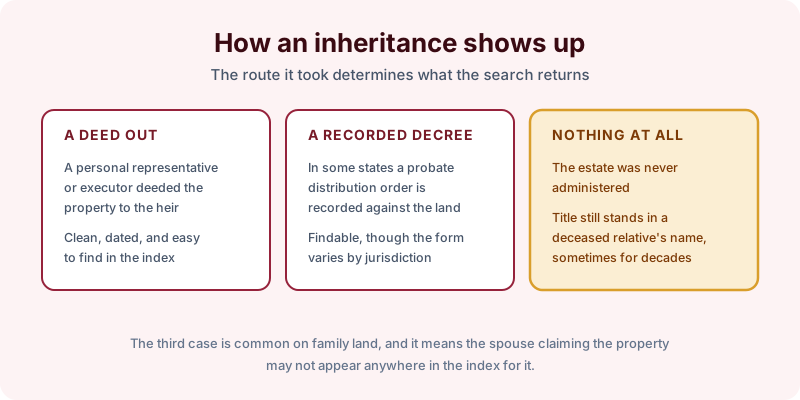
A deed out of the estate. A personal representative or executor deeded the property to the heir. Clean, dated, indexed under the heir’s name, and straightforward to find.
A recorded distribution decree. In some states a probate order distributing real property is recorded against the land. Findable, though the form and the practice vary by jurisdiction.
Nothing at all. The estate was never administered. Title still stands in the name of a parent or grandparent who died in 1998, and the spouse claiming the property may not appear anywhere in the index for it.
That third case is common on family land and it changes how the search has to be run. Searching the spouse’s name returns nothing, because the spouse is not on any instrument. The search has to run against the deceased relative’s name and against the parcel.
What the chain can trace, and what it cannot
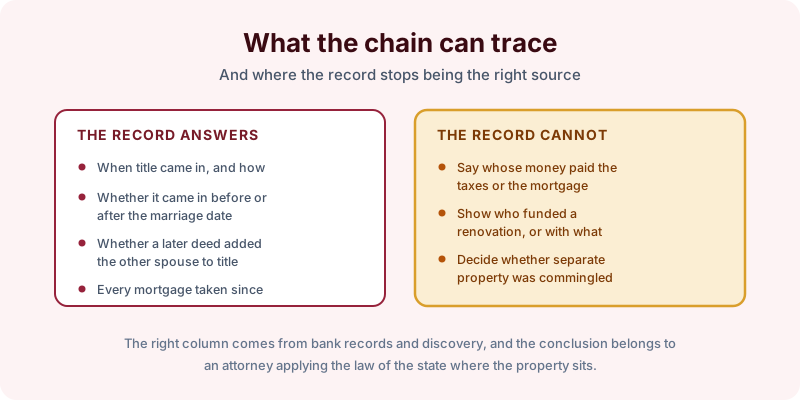
The record answers when title came in and how, whether that was before or after the marriage date, whether a later deed added the other spouse, and what mortgages have been taken since. All dated, all copyable.
The record does not answer whose money paid the property taxes for nine years, who funded the kitchen renovation, or whether separate property was commingled. Those come from bank records and discovery, and the legal conclusion belongs to an attorney applying the law of the state where the property sits. Community property states and equitable distribution states handle these questions quite differently, and the treatment of an inheritance that appreciated during a marriage differs again.
We mention the boundary because inherited-property files are where a report gets over-read most often. A chain showing a 2003 deed into one spouse’s name alone is a fact. It is not a determination that the property is separate.
The recorded events worth finding
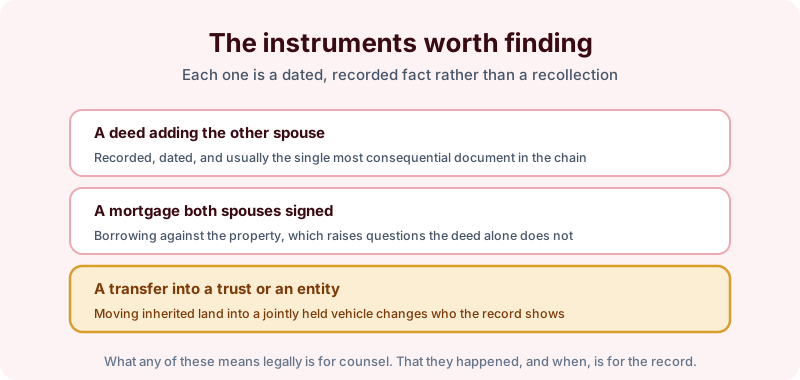
A deed adding the other spouse is usually the most consequential document in the chain, and it is recorded and dated. A mortgage both spouses signed raises questions the deed alone does not, since borrowing against inherited property involves both parties in it. A transfer into a trust or an entity moves the property into a vehicle whose ownership may look nothing like the original inheritance, and that search runs against the entity rather than the person.
Any of these may have happened for reasons that had nothing to do with the marriage: a refinance needed both signatures, an estate plan called for a trust. What they mean legally is for counsel. That they happened, and when, is what the search establishes.
Scoping the search
Supply the deceased relative’s name as well as both spouses’ names, and the county where the property sits rather than the county where anyone lives, since family land is frequently elsewhere. Ask for a term that reaches back past the death, because the operative instruments predate everything the current owner did.
And read the result for what it is. It reports what was found of record in the counties searched, on the date searched. Recording and indexing practice varies, an unadministered estate leaves gaps that are real rather than suspicious, and an empty result does not prove nothing exists. Our products page sets out the available scopes.
The takeaway
Find out which of the three routes the inheritance took, search the deceased relative’s name when the estate was never closed, and treat the chain as a timeline rather than a conclusion. Start the order online, or send us the names and the county and we will tell you what a search of that scope would and would not cover before anything is ordered.