

· AFX Research
Liens Recorded After the Decree: What Happens to the House
A creditor of the departing spouse can still reach the house while that spouse remains on the record title. Why the gap exists, and how to close it.
Table of Contents
The decree says the house goes to one spouse. Eight months later, at a refinance, a judgment appears against the other spouse, recorded after the case ended, attached to the property. Nobody did anything wrong and the decree was not violated. The lien exists because of a gap between what the court ordered and what the county record showed, and that gap is entirely avoidable. This is the failure mode behind our note on the decree versus the deed, seen from the creditor’s side.
Timing is the whole question
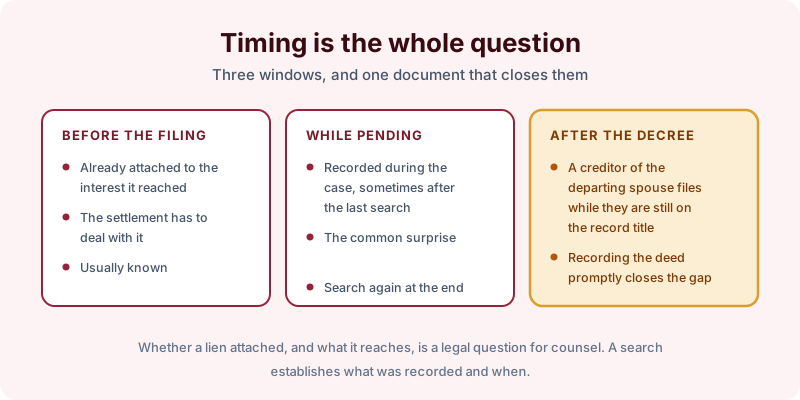
Before the filing, a recorded judgment had already attached to whatever interest the debtor spouse held, and the settlement has to deal with it. These are usually known, and they are covered in our note on liens against marital property.
While the case was pending is the common surprise. Cases run for months, a search done at the outset speaks only as of its own date, and a lien recorded in month seven will not appear on a report from month one.
After the decree is the situation this post is about. The court has spoken, but a creditor searching the county index sees the departing spouse still on record title, and a judgment recorded against that name reaches the interest the record shows they own.
A lien follows the debtor’s interest
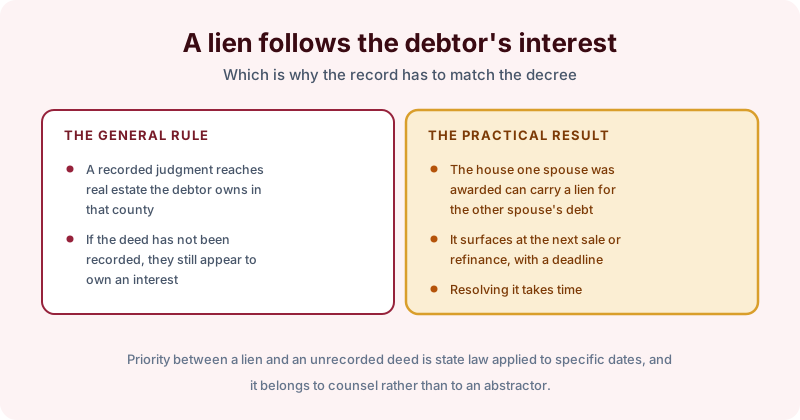
The general mechanism is simple. A recorded judgment operates against real estate the debtor owns in that county. If the deed carrying out the settlement was never signed, or was signed and never recorded, then as far as the record is concerned the departing spouse still holds an interest, and that is the interest a creditor pursues.
The practical result is that the spouse who kept the house can be holding property encumbered by the other spouse’s debt, discovered at the worst possible moment, with a closing date already set. How a priority contest between a recorded lien and an unrecorded deed actually resolves is state law applied to specific dates, and it belongs to counsel rather than to an abstractor. What is not in dispute is that the argument is expensive and the prevention is cheap.
Two related items travel with this. Support liens and state or federal tax liens frequently operate under their own rules and may reach further than an ordinary judgment. And a home equity line that was never closed can be drawn on again after the decree, which is a different problem with the same shape.
There is a second reason to move quickly that has nothing to do with creditors. A departing spouse who remains on the record title is also still in the chain for anything else that touches the parcel, including tax notices, code enforcement letters, and the paperwork of a later sale. Getting the deed recorded resolves several problems at once.
The check worth running once
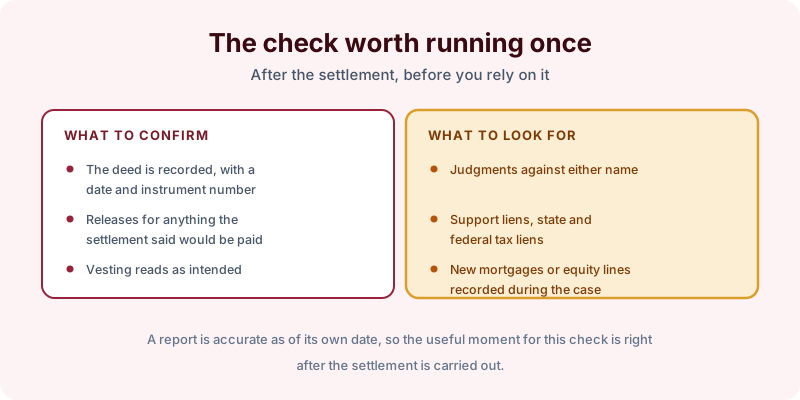
Run one search after the settlement is carried out. Confirm the deed is recorded with a date and instrument number, that the vesting reads as intended, and that releases exist for anything the settlement said would be paid off. Then look for judgments against either name, support and tax liens, and any new mortgage or equity line recorded during the case, which is the same follow-through described in our note on unrecorded deeds and side agreements.
A report is accurate as of its own date, which is exactly why the useful moment for this check is right after the settlement rather than years later when someone is trying to sell. Recording and indexing practice varies by county, an empty result reflects the record rather than proving nothing exists, and whether a particular lien attached is a legal question for counsel.
The takeaway
Record the deed promptly, then verify it. The window a post-decree creditor can reach through is open exactly as long as the county record still shows the departing spouse as an owner, and closing it is a filing rather than a fight. Start the order online, or send us the names and addresses and we will tell you what a search of that scope would and would not cover before anything is ordered.