

· AFX Research
What a Business Run From the Marital Home Adds to a Search
A home based business puts new filings against the residence, new restrictions on the land, and a buyout problem where the house and the livelihood are the same asset.
Table of Contents
A contractor with a shop behind the garage, a therapist seeing clients in a converted front room, a bakery that outgrew the kitchen. When a business runs from the marital home, the property search has to be scoped differently, because the house is now exposed to a second set of claims and the land itself may carry restrictions nobody has thought about since closing.
What the business adds
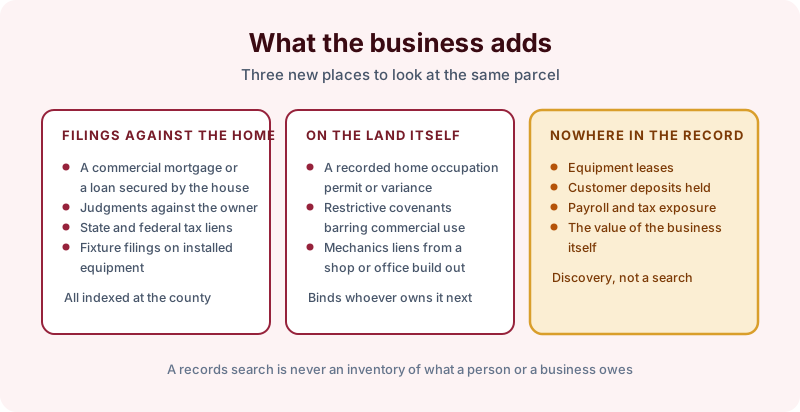
Three new categories appear, and only two of them are searchable.
The first is filings against the home. A commercial loan secured by the residence, a judgment against the owner, state and federal tax liens, and fixture filings covering installed equipment are all indexed at the county and all come back in a search.
The second sits on the land. A recorded home occupation permit or use variance, restrictive covenants that bar commercial activity outright, and mechanics liens left by whoever built the shop or finished the basement bind whoever owns the property next. Covenants in particular catch people out, and the mechanism is the one described in HOA liens and assessments in a divorce.
The third category is not in the record anywhere. Equipment leases, customer deposits held, payroll exposure and the value of the business itself are discovery matters pursued through bank records and testimony, not through the recorder.
Which name the claim attaches to
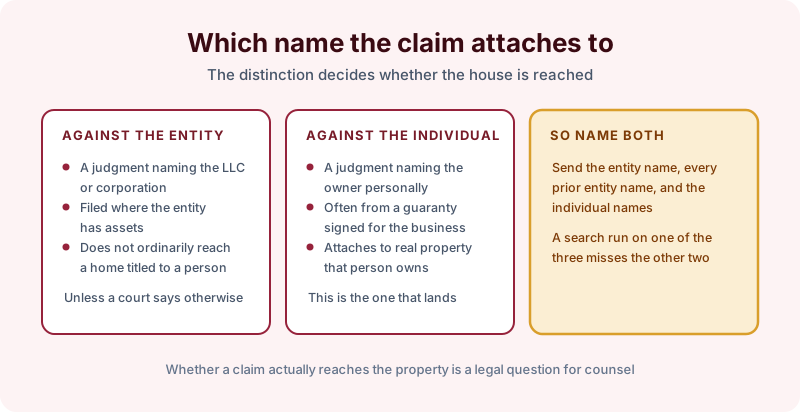
This distinction decides whether the house is reached at all.
A judgment naming an LLC or a corporation does not ordinarily attach to a home titled in an individual’s name. A judgment naming the owner personally does, and personal judgments are common in small business lending because a lender asked for a guaranty.
The practical consequence is about scoping rather than law. Send the entity name, every prior entity name, and the individual names, because a search run against one of the three will miss the other two. That is the same reasoning set out in property in an LLC or trust during a divorce search, approached from the opposite direction.
Mechanics liens are worth a specific look
A home business usually means a build out, and a build out means contractors. A claim recorded by a framer or an electrician after the work was finished attaches to the residence and will have to be cleared before any refinance or sale, which is the pattern covered in mechanics liens on the marital home.
The recorded permits are useful for a second reason. They date the work, and the date is frequently the fact that matters when one party says the shop was built before the marriage and the other says it was not.
There is a timing wrinkle worth knowing. Mechanics lien statutes in many states date a claim from when work began rather than from when the claim was filed, so a lien recorded months after a build out finished can still reach back. A search run early in a case and a search run at the closing table can therefore return different answers about the same work, through no fault of either one.
Where it lands in the split
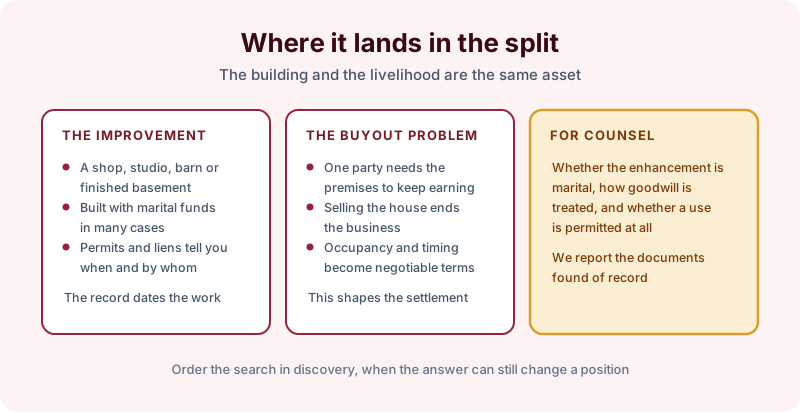
The hard part is rarely legal. One party needs the premises to keep earning, and selling the house ends the business. That turns occupancy, timing and a right of first refusal into negotiated terms rather than afterthoughts.
Whether an improvement built with marital funds enhanced separate property, how business goodwill is treated, and whether the use is permitted at all are conclusions for counsel in that state. What a search contributes is the documentary record, with copies, and it is most useful during discovery while a position can still change.
The takeaway
A records search reports what was recorded and found in the indexes reviewed, over the term searched, in the county where the property sits. It is not a complete inventory of what a person or a business owes, an empty result does not prove a property is unencumbered, and recording and indexing practice varies by county. Start the order online, or send us the address and every entity and individual name and we will tell you what a search of that scope would and would not cover before anything is ordered.