

· AFX Research
Mechanics Liens That Reach the Marital Home After a Decree
Unpaid remodel work, subcontractors who file after the decree, why a lien dates back to when the work began, and what a search of the county record will show.
Table of Contents
The renovation that was supposed to help the house sell is a familiar item in a divorce file, a kitchen finished in a rush, a roof replaced the summer before the separation, a contractor who was paid partway and then stopped being anyone’s priority. Months later, a claim shows up recorded against the property. Unlike the judgment liens recorded after a decree, which follow a person, this one attaches to the house itself, which means it lands on whichever spouse kept it.
How a construction claim reaches the title
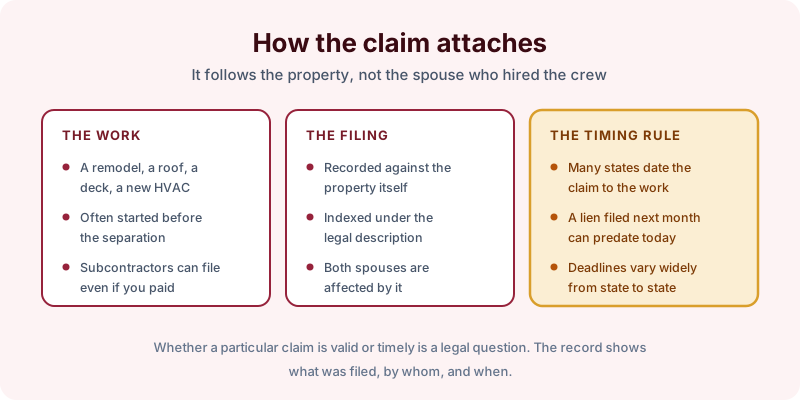
A contractor, subcontractor, or supplier who improves real property and is not paid can, in every state, record a claim against that property. The details differ enormously — who qualifies, what notice they must give first, how long they have to file — but the shape is consistent, and two features of it matter in a divorce.
The first is that the claim runs against the parcel. It does not care which spouse signed the contract, which one chose the tile, or which one moved out. The second is that in many states the priority of the claim relates back to when the work began or when materials were first delivered, rather than to the day the document was recorded. A lien filed three months from now can therefore sit ahead of things that were recorded in the meantime.
There is a subcontractor wrinkle worth knowing. In many states a subcontractor or supplier who was never paid by the general contractor can file against the property even when the homeowner paid the general in full. Whether that is true in a given state, and whether any particular claim is valid or timely, is a legal question for counsel rather than something the record decides.
Why divorces produce them
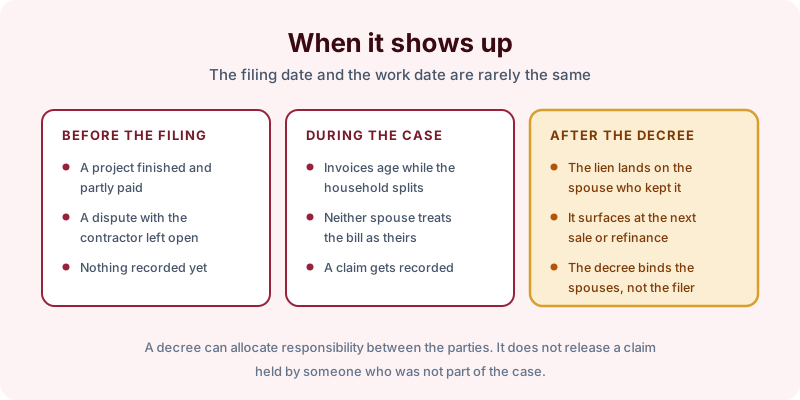
The mechanism is ordinary rather than sinister. A project starts while both spouses are in the house and paying bills jointly. The separation splits the household, and the final invoice becomes an item neither person considers theirs. The contractor waits, calls the wrong spouse, and eventually files.
The timing is what makes it a title problem instead of a billing dispute. A claim recorded after the decree, for work performed well before it, arrives on a title that has already been divided. A decree can allocate responsibility for that debt between the parties, and it should, but it does not release a claim held by a contractor who was not a party to the case. The lienholder’s rights against the property come from state lien law, not from the family court file. This is the same structural point our note on refinancing the marital home runs into, because the lender sees the record, not the agreement.
What a search of the record will show
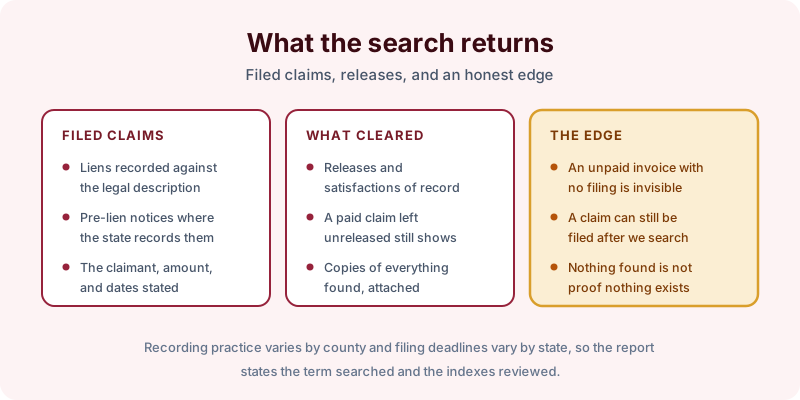
A search of the parcel returns any claims recorded against the legal description, with the claimant, the amount stated, the dates, and copies of the instruments. It is the same parcel-level sweep described in our process. It also returns releases, which is the half people forget, because a claim that was paid but never released still sits in the index and will still stop a closing until someone clears it. In states that record pre-lien or preliminary notices, those come back too, and they are useful early warning.
The honest limit is straightforward. An unpaid invoice that nobody has filed on leaves no trace in the county record, and a contractor still inside the filing window can record a claim the week after the search. Nothing found is not proof that nothing exists. That is an argument for timing the search near the settlement or the sale rather than early in the case, and for asking both spouses directly what work was done in the last two years.
The takeaway
If the house was worked on during the marriage, check the record before the property is allocated, not after the buyer’s lender finds it. Start the order online, or send us the address and the dates of any recent work and we will tell you what a search of that scope would and would not cover before anything is ordered.