

· AFX Research
Tenancy by the Entirety, and What a Divorce Changes About It
What the form of ownership protects while the marriage lasts, how a divorce converts it, the creditor gap that opens on the judgment date, and when to search.
Table of Contents
Many married couples hold their home as tenants by the entirety without ever having heard the phrase. It is a form of co-ownership available only to spouses, and in the states that recognize it, it does something no other form does — it can put the property out of reach of a creditor who has a claim against only one of them. That protection is quietly load-bearing, and a divorce removes it.
When it ends matters more than what it is, because the ending is not the day the deed changes. It is earlier, and nobody is usually watching.
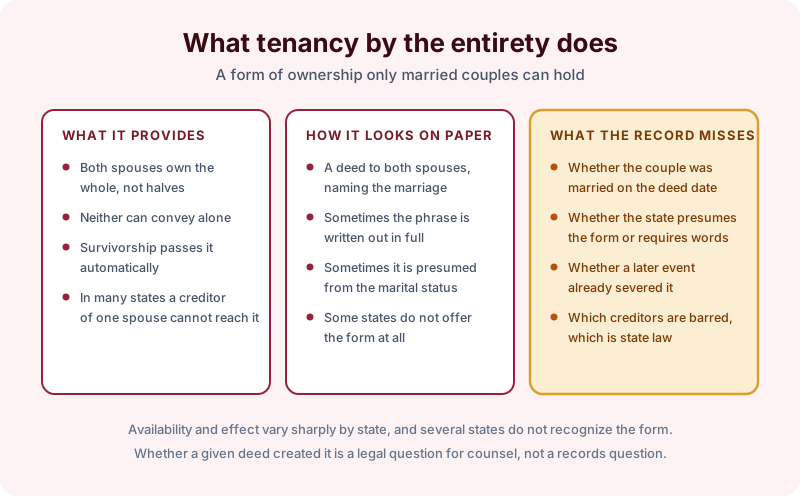
What the form actually does
Under tenancy by the entirety, the spouses do not own halves. They each own the whole, as a single legal unit created by the marriage. Three consequences follow. Neither can convey or mortgage alone. On the death of one, the survivor takes the whole without probate. And in many states that offer the form, a judgment against one spouse alone cannot be enforced against the property.
That last one is the piece people are usually relying on without realizing it. It is also the piece that disappears first.
The form is not available everywhere. Roughly half the states recognize it, some limit it to real property, and a few have abolished it entirely. Whether a particular deed created it turns on the deed’s words and that state’s presumptions — a legal question. What our search does is put the deed and its vesting language in front of the person who has to answer it.
What a divorce does to it
A tenancy by the entirety exists because a marriage exists. End the marriage and the foundation is gone, so in most states the final judgment of divorce converts the ownership automatically, usually into a tenancy in common and occasionally into a joint tenancy. Nothing has to be filed for that to happen. It simply happens.
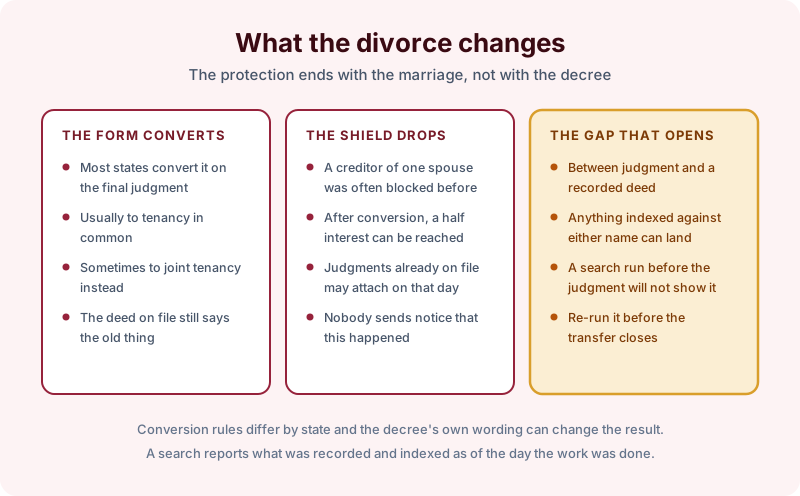
Meanwhile the deed in the courthouse still describes a married couple holding by the entirety, and it will keep saying that until somebody records something else. The record is not wrong. It is describing a state of affairs a court order has already changed.
The gap that opens on the judgment date
Here is where it gets expensive. Suppose a creditor has a judgment against one spouse, docketed years ago, that could not attach to the home because of the entirety protection. On the day the divorce becomes final, the protection converts along with the ownership, and in many states that judgment can attach to that spouse’s newly separate half interest.
Nobody notifies anybody, and the creditor frequently does not need to act — a general judgment lien may reach the interest by operation of law the moment it becomes reachable.
So a search run during the settlement negotiation, showing a judgment that appeared harmless, can look very different after the decree. And a search run before the judgment will not show liens filed in the weeks between the decree and the closing. This is the same timing problem that makes judgment liens recorded after the decree worth their own conversation.
Searching it properly
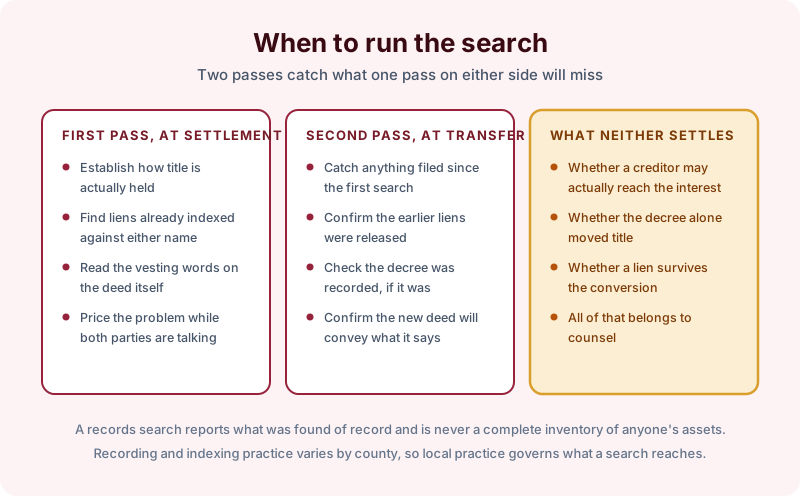
Two passes, not one. The first belongs at the settlement stage, while both parties are still at the table and the cost of a discovered lien can still be allocated between them. It should establish how title is actually held, read the vesting words on the deed itself rather than assuming them, and surface everything indexed against either name.
The second belongs immediately before the transfer closes. It catches what was filed in between, confirms the earlier items were released, and confirms the deed about to be signed conveys what the settlement said it would. A divorce decree does not move title on its own in most situations, and the gap between the order and the deed is exactly the window this second pass covers.
What neither search settles is whether a creditor may actually reach the interest, or whether a lien survives the conversion. Those belong to counsel. The search reports what was found of record, is not a complete inventory of anyone’s obligations, and recording practice varies by county.
The takeaway
The protection that made the home feel safe was tied to the marriage, and it ends when the marriage does — before the deed changes, before anyone records anything, and without notice to either party. Search it twice, once while the settlement is live and once before the transfer, and the liens that were harmless last year do not get to become somebody’s problem at the closing table.
Start the order online, or send us the names and addresses and we will tell you what a search of that scope would and would not cover before anything is ordered.