

· AFX Research
Selling the Marital Home: What the Title Report Has to Show
The four findings that stall a sale once a buyer runs title, how the recorded stack sets what is left to divide, and why searching before listing costs so much less.
Table of Contents
Selling is often the cleanest way to divide a house, because it turns an argument about value into a number. It is also the point at which the property’s recorded history stops being a background detail and becomes a schedule of tasks with a buyer attached. Everything a buyer’s title company will find is findable weeks earlier, for very little, and what has been filed against the property is usually more than either spouse remembers.
What the buyer’s title work turns up
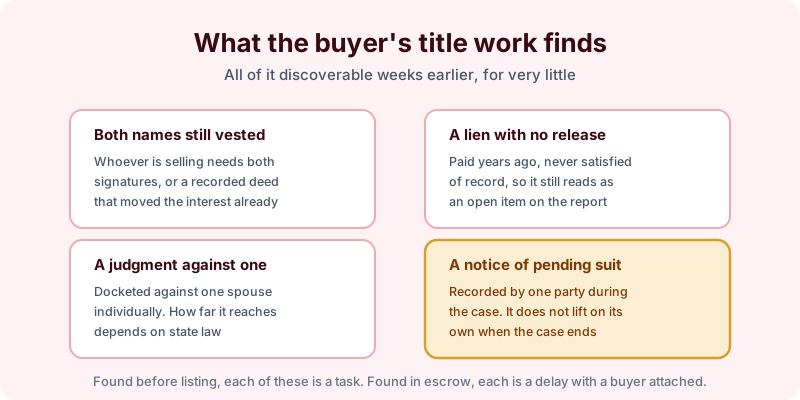
Both names still vested. If no deed has moved the interest, the sale needs both signatures. That is manageable while both parties are cooperating and awkward once they are not.
A lien with no recorded release. A debt paid off in 2016 stays on the record until a satisfaction is recorded. It reads as an open item, and clearing it means locating the release or having a new one issued by a lender that may since have been acquired.
A judgment against one spouse. Docketed individually, it may reach only that spouse’s interest or more than that, depending on state law, how title is held, and any applicable homestead protection. That is a question for counsel; what the report supplies is what was filed, against whom, and when.
A notice of pending litigation. Where one party recorded a notice during the case, it does not lift on its own when the case concludes. Somebody has to record the withdrawal or discharge.
The record sets the number
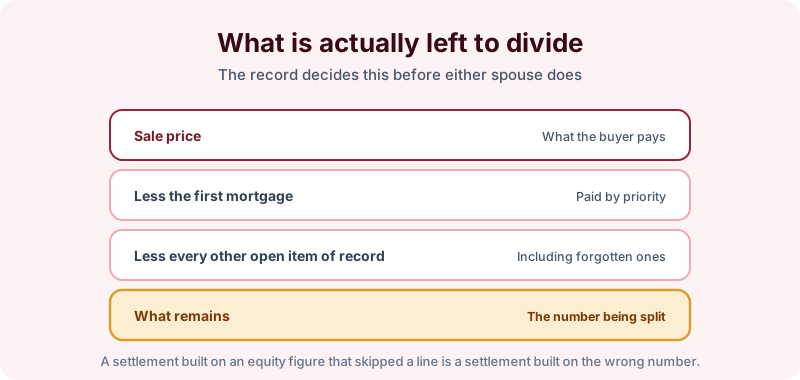
This is the part worth walking through before any figure is agreed. Sale proceeds pay recorded encumbrances by priority, and only what survives that is available to divide. An equity estimate built from a market value minus a remembered mortgage balance skips whatever else is of record, and every skipped line comes out of the number both parties thought they were splitting.
Second mortgages taken out during a thin year, an equity line drawn and half forgotten, tax liens, HOA charges, and assessments all sit in that stack. None of them care which spouse arranged them.
Why timing changes the cost
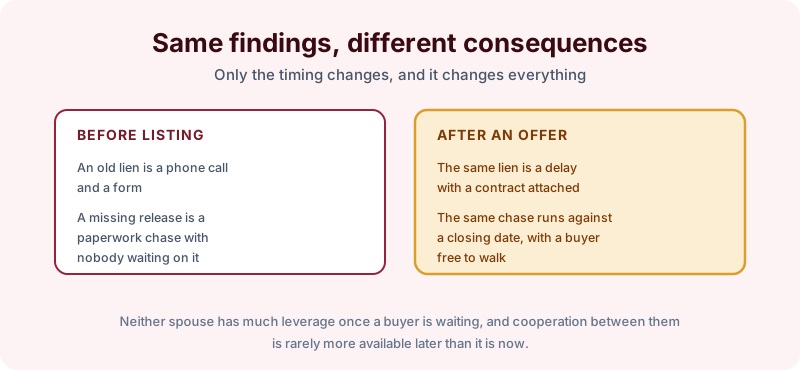
The findings are identical either way. What changes is the leverage. Before listing, an old lien is a phone call and a form, and a missing release is a paperwork chase nobody is waiting on. After an offer, the same items run against a closing date with a buyer free to walk, and neither spouse has much room to be patient.
There is a second reason to go early. Cooperation between two people ending a marriage is rarely more available later than it is now, and some of these fixes need a signature from both. A release that is easy to chase while both parties still have the old file becomes considerably harder once one of them has moved on.
What to send
The property address with a legal description or parcel number, the county, and every name either spouse has used, including maiden and prior married names. Where the property is held by an entity or a trust, that search runs against different names and those have to be supplied too.
One boundary to keep in view. A report states what was found of record in the counties searched, on the date searched. It is not an inventory of what either spouse owes, debts with nothing filed against the property are invisible to it, and an empty result does not prove there are none. Our products page sets out which scope covers what.
The takeaway
Search before the sign goes in the yard, read the stack before agreeing on an equity figure, and treat every open item as a task with a lead time rather than a detail for escrow to sort out. Start the order online, or send us the address and the names and we will tell you what a search of that scope would and would not cover before anything is ordered.