

· AFX Research
Life Estates and Remainder Interests: Divorce Title Search
A house deeded to the children with a parent keeping the right to live there. What the recorded deed establishes, and why the interest stalls a settlement.
Table of Contents
A property division is going smoothly until somebody pulls the deed on the lake house and discovers that the couple does not own it outright. One of them holds a life estate; the children from a first marriage hold the remainder. Nobody is hiding anything. The deed was recorded in 2009, it was part of an estate plan, and it has simply never come up. The interest is real, it has value, and it cannot be sold or divided the way the rest of the file can. This is a close cousin of the situation in our note on inherited property in a divorce.
What a life estate actually splits
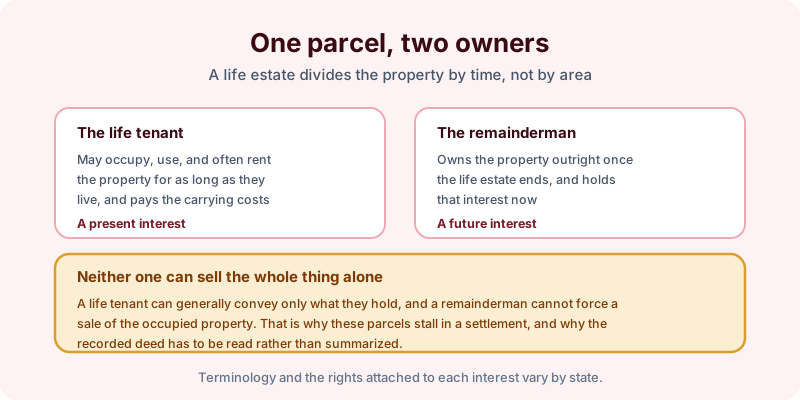
A life estate divides ownership by time rather than by area. The life tenant may occupy and use the property for as long as they live, generally rents it out if they choose, and generally carries the taxes, insurance, and upkeep. The remainderman owns the property outright the moment the life estate ends, and holds that future interest right now — it is a present asset, not a hope.
The consequence is that neither party can deliver clear title to the whole parcel alone. A life tenant can generally convey only what they hold, which is an interest that expires. A remainderman cannot force a sale of property somebody else has the right to occupy. Both signatures, and a valuation of each interest, are typically required to turn the parcel into money — and the exact rights attached to each side vary by state.
Where they come from
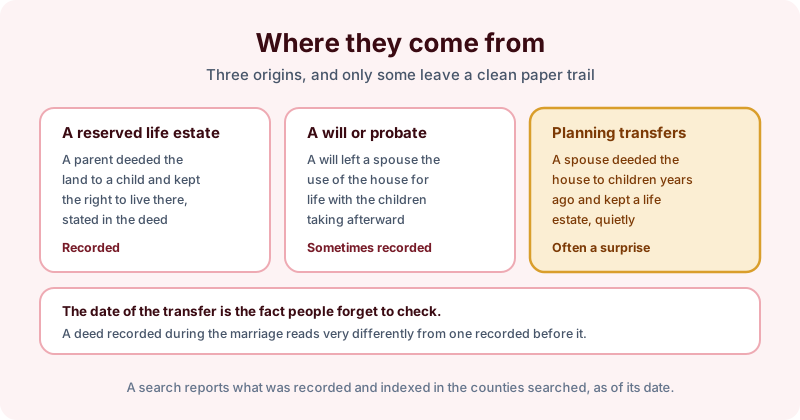
Three origins account for most of them. A reserved life estate is written into a deed: a parent conveyed the land to a child and kept the right to live there, stated in the granting language. A will or probate distribution may create one, leaving a surviving spouse the use of the house with the children taking afterward. A planning transfer is the one that surprises people, where a spouse deeded the house to children years ago and kept a life estate, sometimes without discussing it.
The date is the fact to check first. A transfer recorded during the marriage reads very differently from one recorded before it, and the recording date is exactly the kind of detail the record settles cleanly — the same reason deeds recorded during a separation get pulled early.
Why it stalls a settlement
Because the asset resists the usual remedies. A buyout requires valuing a life interest, which depends on actuarial assumptions rather than on comparable sales. A sale requires the remaindermen, who are frequently adult children with their own views about the divorce. An offset against other property requires agreeing on a number that neither party’s appraiser produced yet.
Getting the recorded instrument early is what keeps this from becoming a late surprise. It names the parties, states the exact language, and shows whether anything was recorded afterward — a release, a deed from a remainderman who has since died, a mortgage signed by only some of the owners.
What the record answers
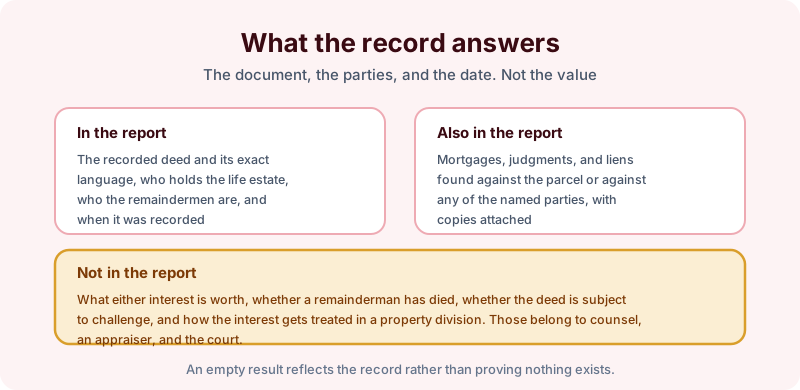
The report gives you the deed, the parties, the date, and any mortgage, judgment, or lien found against the parcel or the named parties, with copies attached. What it will not do is value either interest, confirm whether a remainderman has died, or say how the interest is treated in a property division. Those belong to counsel, an appraiser, and the court. A search reports what was recorded and indexed in the counties searched as of its date, and an empty result reflects the record rather than proving nothing exists.
The takeaway
If a parcel in the file was ever part of an estate plan, pull the deed before anyone puts a number on it. Our products page shows the search depths available. Start the order online, or send us the names and addresses and we will tell you what a search of that scope would and would not cover before anything is ordered.