

· AFX Research
Child Support and Alimony Liens Against the Marital Home
How an arrearage becomes a lien on real property, why it is indexed under a name rather than a parcel, where it can rank, and how to scope a search that finds it.
Table of Contents
Support arrearages are one of the few obligations that can reach real property without anybody filing a lawsuit about the real property. In many states each missed payment becomes a judgment by operation of law the day it comes due, and in a number of them that judgment attaches to the obligor’s land automatically. No hearing, no new case, frequently no document that mentions the house at all.
That combination — automatic attachment plus name-based indexing — makes these hard to find. A parcel search on the marital home can come back clean while an arrearage lien sits in the same courthouse, indexed under a name nobody thought to run.
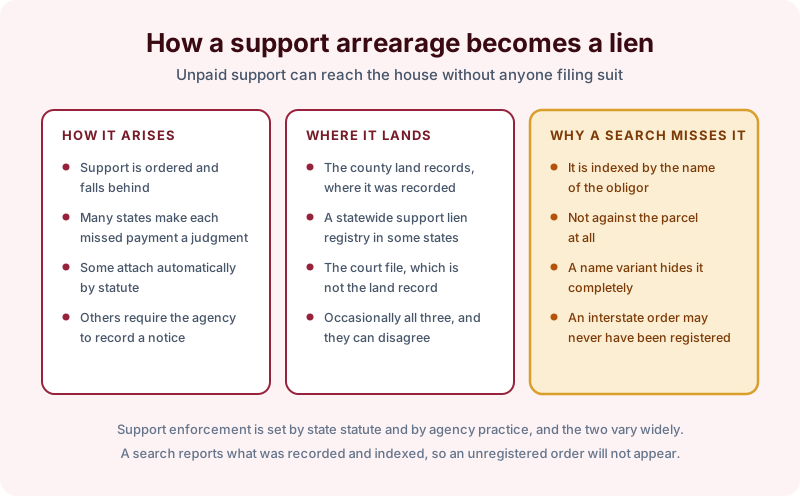
How the lien comes into existence
The mechanics differ by state, and the differences matter. In some states the arrearage becomes a lien the moment it accrues, with nothing recorded to announce it. In others the enforcement agency has to record a notice in the county where the property sits before it touches the land. A third group runs a statewide registry, so the lien is perfected centrally and the county index shows nothing.
Alimony and spousal maintenance are treated similarly in many places, though not all — several states give child support a preferred status they do not extend to spousal support. Whether a given order reaches a given parcel is a question about that state’s statute, and it belongs to counsel rather than to the abstractor.
Why the search has to be built around names
A lien recorded against a person is indexed under that person’s name. It is not indexed against the parcel, which means a search that starts from the address and looks only at what is recorded against the property can miss it completely.
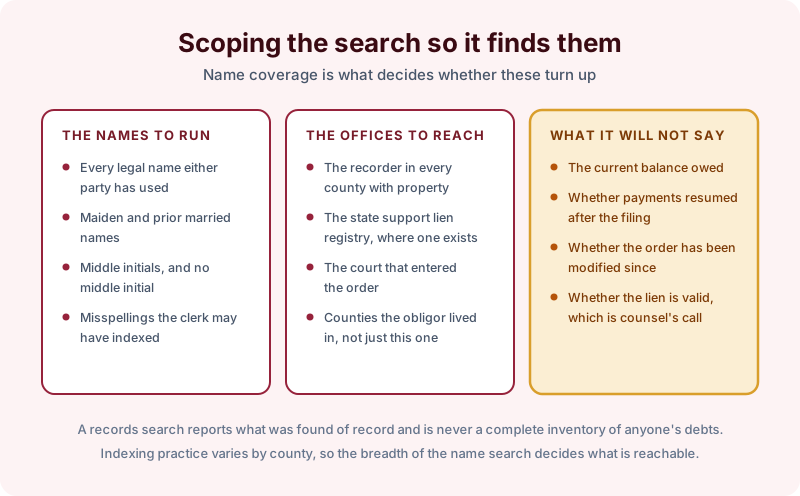
Building the search properly means running every legal name either party has used. Maiden names, prior married names, middle initial and no middle initial, and the spelling variants a clerk may have entered. It also means covering the counties where the obligor has lived, not only the county where the house stands, because a support lien can be recorded anywhere the agency thought there might be assets. The same discipline that governs name changes after a divorce and the property record applies here, for the same reason.
Where the state runs a registry, that registry is a separate search from the county land records, and ordering one does not get you the other. How we scope a search starts from that distinction rather than from the address.
Where it ranks, and why that is unsettled
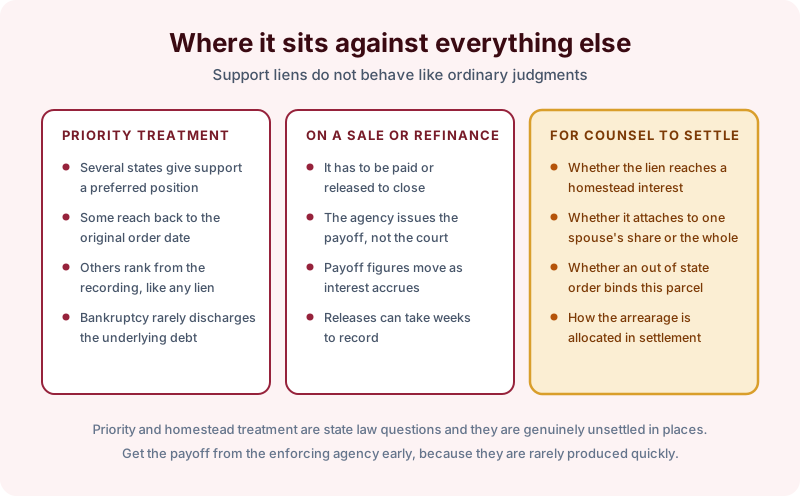
Support liens do not always behave like ordinary judgment liens. Several states give them a preferred position. Some date priority from the original support order rather than from any recording, which can put the lien ahead of mortgages recorded years later. Others treat it as an ordinary lien ranking from the day it was filed.
There is a further wrinkle that comes up constantly in divorce work. Homestead exemptions protect a residence from many creditors, and a number of states carve support obligations out of that protection specifically. So the lien that could not attach to the house if it were a credit card judgment may attach perfectly well when it is unpaid support.
None of that is a records question. Whether the lien is valid, what it reaches, and how it ranks are legal conclusions, and the answers vary enough between states that assuming a national rule is how people get hurt.
Handling it in the settlement
Find these while both parties are still negotiating. A discovered arrearage is a number that can be allocated in a settlement. The same arrearage found three days before closing is a payoff nobody budgeted for, held up by an agency that releases on its own schedule.
Two things are worth requesting early. The payoff figure, which comes from the enforcing agency and not from the court file, and which moves as interest accrues. And confirmation of what has to be recorded to clear the lien once it is paid, because a satisfied lien that never got released still stops a closing. This is the same pattern that makes liens against marital property worth running early rather than at the end.
The takeaway
Support obligations can reach the marital home quietly, automatically, and under a name rather than an address. A search built around the parcel alone will not reliably find them. Build it around every name both parties have used, cover the registry as well as the recorder, and do it while the settlement is still open.
Start the order online, or send us the names and addresses and we will tell you what a search of that scope would and would not cover before anything is ordered.