

· AFX Research
Bankruptcy During a Divorce: What the Property Record Shows
How a bankruptcy filing interacts with a property settlement, which records answer which question, and why both spouses have to be searched by name.
Table of Contents
When one spouse files bankruptcy in the middle of a divorce, the property questions get harder before they get easier. Two courts now have something to say about the same house, and neither of them is the office that actually holds the property record. Sorting out which file answers which question is most of the work, and it is worth doing early, because the answers change what a settlement can safely promise. If the concern is what one spouse owes and what it touches, start with liens against marital property.
Three files, and only one is a land record
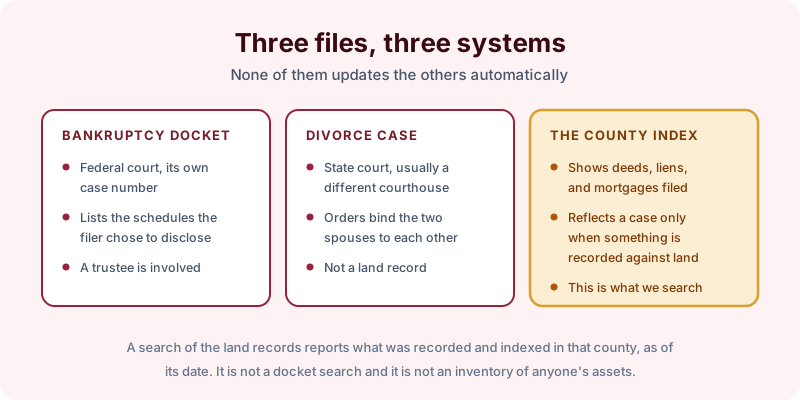
The bankruptcy case is a federal docket with its own number, its own trustee, and schedules the filer prepared. The divorce is a state court case, usually in a different building. The county land records are neither — they are an index of instruments recorded against parcels and against names.
Nothing moves between the three automatically. A bankruptcy petition does not appear in the county index unless something is recorded there, a divorce decree does not change the index either, and the index will keep listing whatever was last recorded no matter what either court has ordered. That is the same disconnect behind a decree that never became a deed, and bankruptcy adds a third party who was never in the family court at all.
What a filing pauses
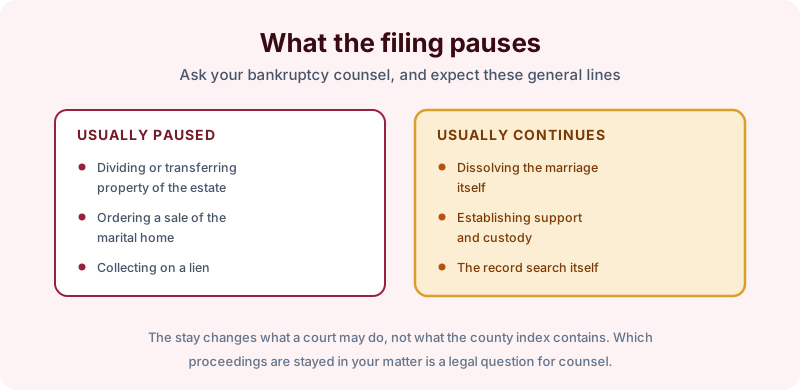
The automatic stay is the reason a family law calendar suddenly stops. As a general matter, proceedings to divide or transfer property that belongs to the bankruptcy estate are paused, while dissolving the marriage itself and establishing support and custody can usually continue. Where exactly the line falls in your case is a legal question for counsel, and the answer depends on the chapter filed and on the state.
What the stay does not do is change the record. The deeds, mortgages, and liens on file stay on file, and a records search remains available and useful while everything else waits. In practice this is often the best moment to run one, because the settlement being negotiated needs to reflect what is actually attached to the property rather than what either spouse believes.
Liens do not care whose debt it was
A judgment recorded against one spouse can attach to real property that spouse owns, including property held jointly, depending on the state and on how title is held. A bankruptcy discharge deals with personal liability for a debt. It does not, by itself, remove a lien that was already recorded against the land.
That distinction produces a specific and avoidable surprise: a spouse who receives the house in a settlement, believing the other spouse’s debts were wiped out, and then discovers a recorded judgment still sitting on the parcel at closing years later. Whether a given lien survived is a legal question, but whether it is on file is a records question, and the records question can be answered this week.
Search both names, and every name
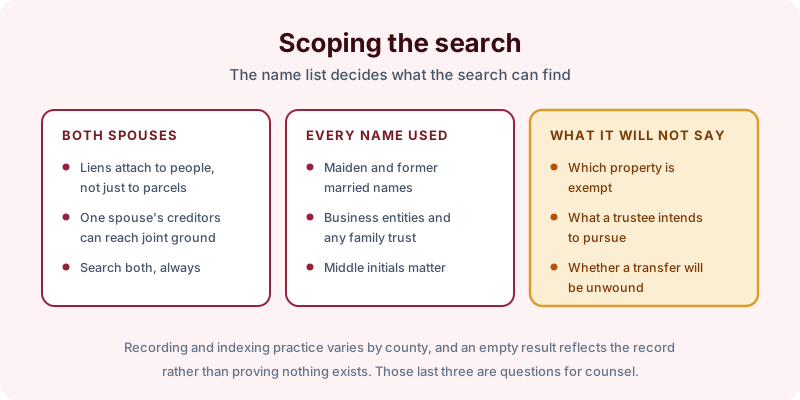
Run both spouses, not just the filer. Run maiden and former married names, middle initials, and any business entity or family trust either spouse has used, which is the same discipline that surfaces real estate nobody disclosed. Where property sits in another county or state, each county has to be searched where the land is.
Read the result for what it is. A search reports the instruments recorded and indexed in that county as of its date. Recording and indexing practice varies by county, an empty result reflects the record rather than proving nothing exists, and no search can tell you which property a trustee will pursue, what is exempt, or whether a transfer between spouses will be examined later. Those are conclusions for counsel.
The takeaway
Treat the three files as three separate questions and get the records answer first, because it is the one that is cheap, fast, and independent of both courts’ calendars. Start the order online, or send us the names and addresses and we will tell you what a search of that scope would and would not cover before anything is ordered.