

· AFX Research
When a Divorce Leaves a Cloud and Quiet Title Is the Fix
A decree that awarded the house does not always move title. Why the cloud forms, the cheaper fixes to try first, and the search a quiet title action depends on.
Table of Contents
Years after a divorce, somebody tries to sell the house and the title company reports that an ex spouse is still on the deed. The decree says otherwise, everybody remembers the agreement, and none of that is what the land record shows. This is one of the more common curative problems in residential title, and it is almost always the result of a step nobody took at the time.
Why the cloud forms
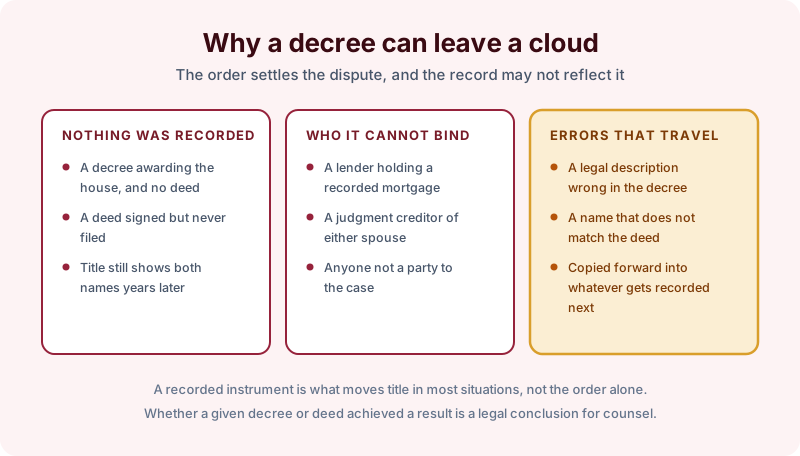
Nothing was recorded. The decree awarded the house and no deed followed, or a deed was signed and never filed. Title still shows both names, because in most situations a recorded instrument is what moves title rather than the order alone. That is the point at the center of a divorce decree versus a deed.
The decree could not bind everyone. A lender holding a recorded mortgage, a judgment creditor of either spouse, and anyone else who was not a party to the case are unaffected by what the court ordered between the two spouses.
Errors travel. A legal description wrong in the decree, or a name that does not match the deed, gets copied forward into whatever is recorded next and propagates from there.
Try the cheaper fixes first
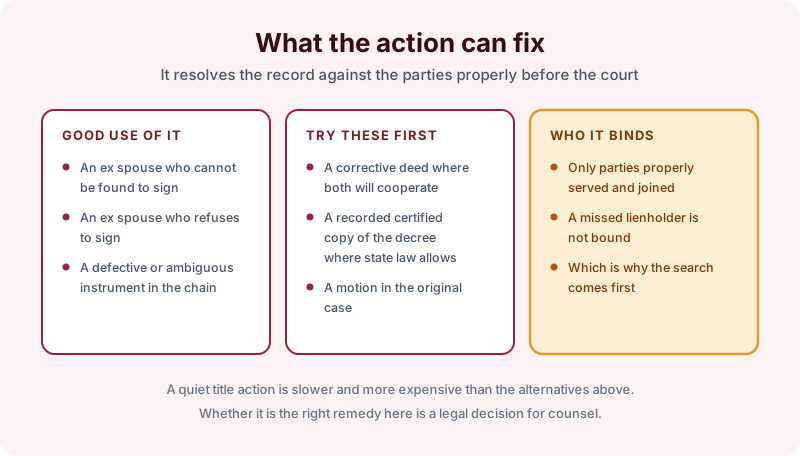
A quiet title action is slow and expensive relative to the alternatives, so it is worth confirming the alternatives will not work.
A corrective deed solves it where both parties will cooperate, which is more often than people assume once the emotional temperature has dropped. Recording a certified copy of the decree resolves it in some states where the decree itself was drafted to operate as a conveyance. A motion back in the original case can produce an order directing execution of a deed.
Quiet title earns its cost when an ex spouse cannot be found, refuses to sign, or when the instrument in the chain is genuinely defective or ambiguous. Where the missing spouse is the problem, finding a missing spouse in the property record is usually the first step rather than the last.
One complication changes the calculation entirely. Where the ex spouse has died, the interest showing on the deed passed to their heirs or their estate, and the people who now have to sign or be served may be several and may not know they hold anything. That is a materially larger job than obtaining one signature, and it is worth establishing early rather than discovering after a complaint is drafted.
The limit is the same one that applies to any judgment. It binds only parties properly served and joined, so a lienholder nobody named is not bound by it, which is precisely why the search comes before the filing.
The search the action depends on
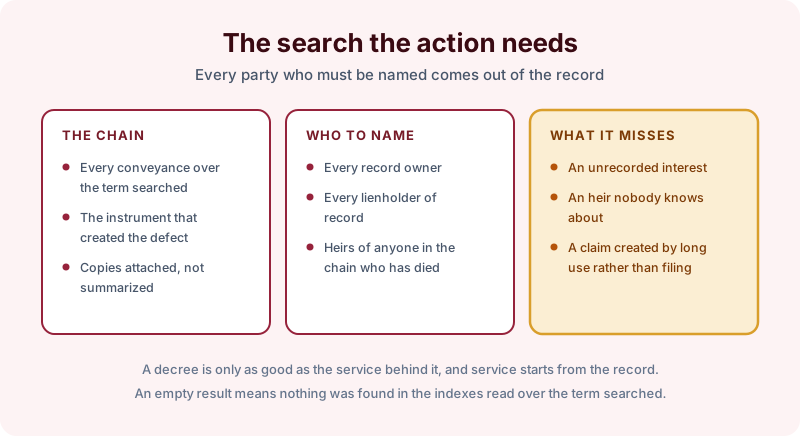
You need every conveyance over the term searched, the instrument that created the defect, and copies attached rather than summarized. From that comes the list of who has to be named, which is every record owner, every lienholder of record, and the heirs of anyone in the chain who has died.
What it will not surface is an unrecorded interest, an heir nobody knows about, or a claim created by long use rather than by filing. A decree is only as good as the service behind it, and service starts from the record, so a thin search produces a thin judgment. Recording and indexing practice varies by county, and our report names the indexes actually reviewed.
Whether quiet title is the right remedy, and what has to be pleaded, are legal decisions for counsel. We supply the chain and the parties.
The takeaway
Most of these clouds exist because a deed was never recorded, so check whether a corrective deed or a recorded decree will fix it before anyone files anything. Where an action is genuinely needed, run the chain first, because the search is what tells you who must be served for the judgment to be worth having. Start the order online, or send us the address and the names and we will tell you what a search of that scope would and would not cover before anything is ordered.