

· AFX Research
Prenuptial Agreements and the Property Record: What Is Filed
Why a marital agreement rarely appears in the county records, which deeds it leaves behind, and how a title search supports the property side of a settlement.
Table of Contents
A prenuptial or postnuptial agreement can decide who keeps the house, but it does that as a contract between two people — not as an entry in the county land records. That gap is the source of a lot of confusion during a divorce, because the document everyone is arguing about is usually nowhere in the record, while the deeds and mortgages that the record does hold may tell a very different story about who owns what.
What the agreement actually does
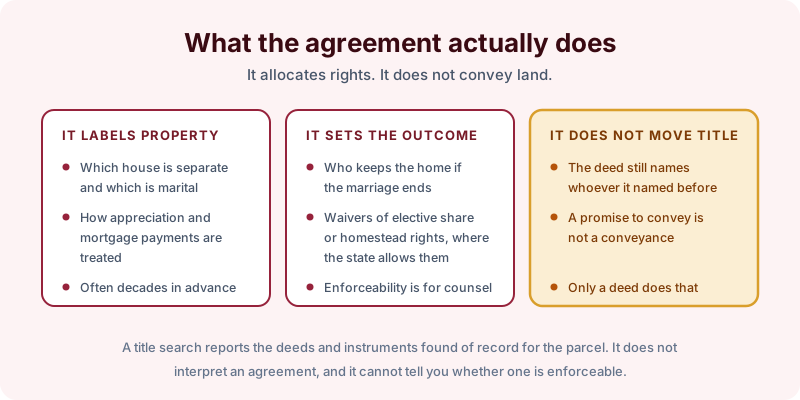
A marital agreement does three kinds of work on real estate. It labels property, saying which house is separate and which is marital, and often addressing how appreciation and mortgage payments get treated. It sets an outcome, naming who keeps the home if the marriage ends, sometimes with waivers of elective share or homestead rights where the state permits them. And it does all of that in advance, occasionally decades before anyone needs it.
What it does not do is move title. If the deed named both spouses before the agreement was signed, it names both spouses afterward. A promise to convey is not a conveyance — only a recorded deed changes who holds title, which is the same distinction covered in our post on a divorce decree versus a deed.
That distinction matters practically. A spouse holding an agreement that awards them the house still needs a deed, and a lender refinancing the property will look at the recorded chain rather than at the agreement.
Is it in the county record?
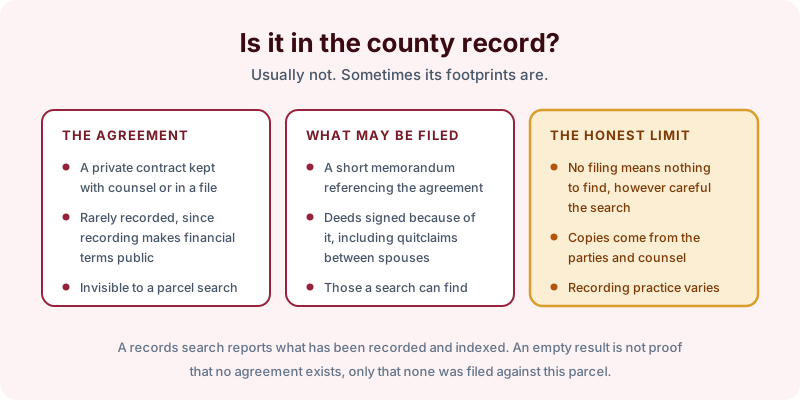
Most agreements are never recorded. They are private contracts, and recording one would put financial terms into a public index, so counsel usually keeps them out of the land records deliberately. In a handful of situations something does get filed: a short memorandum referencing the agreement without reciting its terms, or, far more often, the deeds signed because of it — an interspousal transfer, a quitclaim from one spouse to the other, or a new deed at a refinance.
Those recorded footprints are what a search can find, and they are frequently more useful than the agreement itself. A quitclaim deed recorded three months after the wedding tells you something concrete happened. Our post on quitclaim deeds in a divorce covers what those instruments do and do not accomplish.
The honest limit runs the other way too. If nothing was filed, no search will find it, however carefully it is run. An empty result is not proof that no agreement exists; it means nothing was recorded against that parcel. Recording and indexing practice also varies by county, so a memorandum filed in one jurisdiction might be rejected in another.
Scoping the search
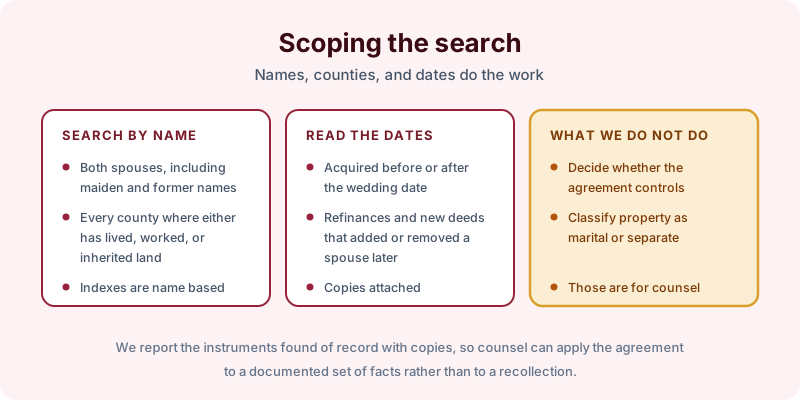
Two inputs do most of the work: names and counties. Land records are indexed by name, so we need both spouses, including maiden and former names, and every county where either has lived, worked, inherited, or invested. Our post on finding undisclosed real estate covers how that name list gets built.
Dates then carry the analysis. Whether a parcel was acquired before or after the wedding, whether a refinance added or removed a spouse from the deed, whether a transfer happened during a separation — those facts come straight off the recorded instruments, and we supply copies so the dates are verifiable rather than remembered. Our post on deeds recorded during a separation looks at the timing question specifically.
What we do not do is apply the agreement. Whether it is enforceable, whether it was signed with adequate disclosure, whether it survives a state’s statutory protections, and whether a given parcel counts as marital or separate under it are legal conclusions for counsel. We document; your attorney characterizes.
The takeaway
A marital agreement and the land records are two separate bodies of evidence, and a property settlement needs both. The agreement says what should happen. The record says who currently holds title, what encumbers it, and what was signed and when. Where the two disagree, the deed is what a buyer, a lender, or a title company will act on.
Start the order online, or send us the names and addresses and we will tell you what a search of that scope would and would not cover before anything is ordered.