

· AFX Research
Mineral Rights in a Divorce and the Asset With No Address
Severed minerals, inherited fractions, royalty income and the counties nobody names, plus what a land records search can and cannot settle about the interest.
Table of Contents
Most property in a divorce has an address, and an address is what makes it findable. A severed mineral interest has neither. It can sit under farmland three states away, produce a check for eleven dollars a month, and never appear on a bank statement in a way anyone recognizes — which is why it is one of the most commonly omitted assets in a property settlement. The problem is close kin to the one in our note on finding undisclosed real estate, with an extra wrinkle, because the land and the minerals under it may belong to different people entirely.
Why these interests go missing
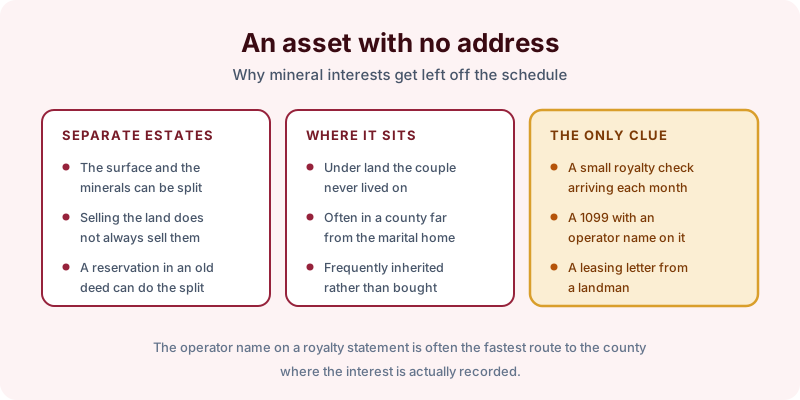
In much of the country the mineral estate can be severed from the surface, usually by a reservation in an old deed. Once that happens, the two are separate pieces of property that can be sold, leased, taxed, and inherited independently. Someone can own minerals under a section of ground they have never seen and could not find on a map.
That is exactly how they arrive, by inheritance, in fractions, often several generations down from the original owner. Nobody bought them, no closing statement records them, and there is no mortgage payment to make anyone think about them each month. A spouse can be entirely honest and still not list an asset they do not know they hold.
The three offices that hold the answer
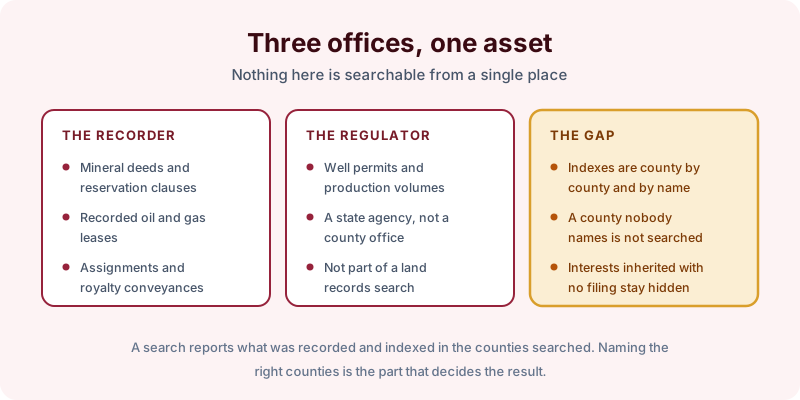
The county recorder holds the land side, meaning mineral deeds, reservation clauses in old conveyances, recorded oil and gas leases, and assignments of royalty. That is what a search reaches, and it is where the ownership documents live, gathered the way our search process handles any other county record.
The state oil and gas regulator holds well permits and production data, which are not land records and do not come back in a title search. The operator holds the division orders and royalty statements, which show what is actually being paid and to whom.
The practical constraint is the index. Land records are organized county by county and searched by name, so the search covers the counties it is asked to cover. A tax statement, a 1099, a royalty check stub, or a leasing letter from a landman each name a county or an operator, and any one of them turns an unfindable asset into a findable one. Discovery requests that ask for those documents by name tend to work better than requests that ask about mineral rights in the abstract, a point our note on title searches in divorce discovery develops.
What comes back, and what does not
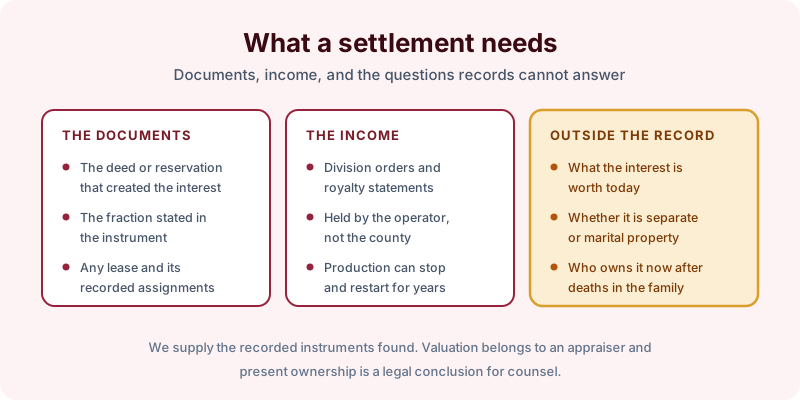
A search returns the recorded instruments found in the counties searched, with copies of the deed or reservation that created the interest, the fraction stated in it, any recorded lease, and any assignments. That is the raw material for dividing the asset, and it is frequently the first time either party sees the actual wording. It is the same deliverable as any of our products, pointed at a different index.
Three things it does not do. It does not value the interest, which takes production data and an appraiser. It does not decide whether the interest is marital or separate property, which turns on how and when it was acquired under state law. And it does not establish who owns it today, because mineral interests pass at death with nothing filed in the county, so the last owner named in the record may have died in 1994, and present ownership is a legal conclusion drawn by counsel from the documents rather than a line in a report. Recording and indexing practice also varies by county, so an empty result reflects the record searched rather than proving no interest exists.
The takeaway
If either spouse has rural family land in their background, a mineral interest is worth ruling in or out before the settlement is signed, because reopening one afterward is far harder than looking now. Start the order online, or send us the names and any county, operator, or royalty statement you have and we will tell you what a search of that scope would and would not cover before anything is ordered.