

· AFX Research
Manufactured Homes in a Divorce: Is It Titled Like a Car?
Why a manufactured home may not be part of the real estate at all, how the conversion works, and which record answers the ownership question in a settlement.
Table of Contents
A manufactured home on land the couple owns looks like any other house in a property settlement, and it frequently is not. Depending on the state and on paperwork nobody thought about at the time, the home may be personal property with a certificate of title like a vehicle, while the land underneath it is real estate with a deed. Two assets, two records, two ways for a settlement to go wrong. The distinction matters as much as the marital or separate character of the property itself.
Two systems, one house
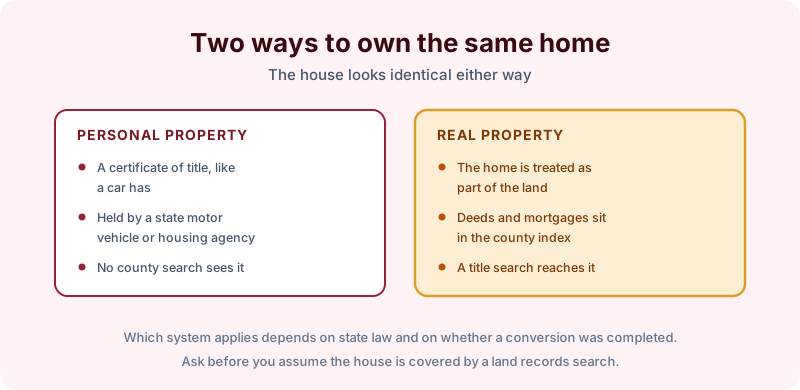
A manufactured home leaves the factory as personal property, carrying a certificate of title from a state agency — often the motor vehicle department — that names the owner and any lienholder. Ownership transfers the way a car’s does.
Once the home is permanently placed on land and the statutory steps are completed, most states allow it to be converted to real property. From that point it is part of the parcel, it passes with a deed, and it can be mortgaged like any other house. Both arrangements are ordinary, and from the driveway they look identical.
How the classification actually happens
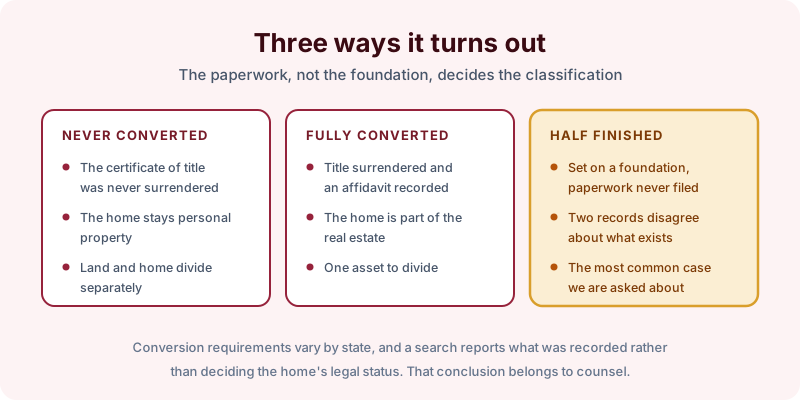
Conversion is a paperwork event, not a construction event. A poured foundation and skirting do not change the classification by themselves. In most states the process involves surrendering or cancelling the certificate of title and recording an affidavit of affixation, or a similarly named instrument, in the county land records.
The middle case is the one we are asked about most: the home sits on a permanent foundation, the family treats it as the house it obviously is, and the certificate of title was never cancelled. Now the state agency’s record and the county’s record disagree about what exists, and both are technically accurate about their own half. Requirements and terminology vary by state, and whether a particular home has legally become part of the realty is a conclusion for counsel rather than for an abstractor.
Why it matters to a settlement
Three practical consequences follow, and all of them are worth knowing before an agreement is signed.
A settlement that awards “the residence” may not clearly transfer a home that is still titled as personal property, and a deed alone may not move it. Financing is affected too, because a home that has not been converted is generally secured differently, so what looks like a mortgage may be a lien noted on a certificate of title instead. And the search itself has limits: a county land records search covers the land and anything recorded against it, while the certificate of title has to be requested from the agency holding it.
Older homes add a wrinkle. Records for a home placed in the 1970s or 1980s can be thin on both sides, and where the certificate of title was lost decades ago, the state’s replacement process is its own project.
What to send, and what comes back
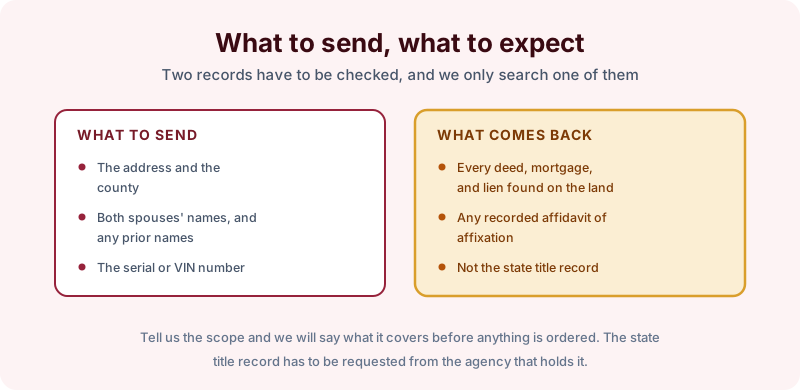
Send the address and the county, both spouses’ names along with any prior names, and the home’s serial or VIN number if you have it. What comes back is every deed, mortgage, and lien found of record against the land, plus any recorded affidavit of affixation, with copies of the instruments so the wording can be read rather than summarized.
A search reports what was recorded and indexed in that county as of its date. Recording practice varies by county, an empty result reflects the record rather than proving nothing exists, and the absence of a recorded affixation affidavit is a fact about the record rather than a determination about the home.
The takeaway
Establish which system the home lives in before you divide it, because the answer decides which document actually transfers it. Start the order online, or send us the names and addresses and we will tell you what a search of that scope would and would not cover before anything is ordered.