

· AFX Research
Joint Tenancy or Tenancy in Common After a Divorce Decree
The vesting words on the deed decide what happens if an ex spouse dies, and a decree does not change them by itself. What severs a joint tenancy and what the record shows.
Table of Contents
Two people bought a house as joint tenants with right of survivorship. Years later they divorce, the decree divides the property, and nobody records anything new. On paper the survivorship right may still be sitting there, which means that if one of them dies the other could take the whole property, decree or not. That is the sort of outcome nobody intends and the record quietly permits, and it starts with how the original deed was worded, in much the same way a divorce decree and a deed do different jobs.
Two forms of co-ownership, one important difference
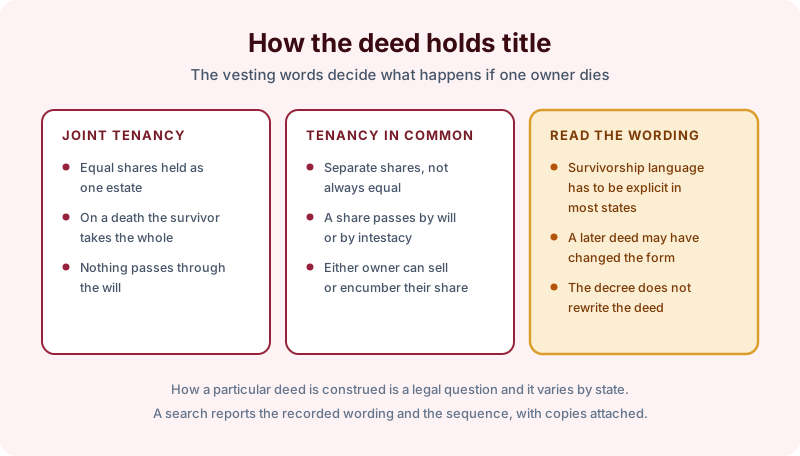
Joint tenancy holds equal shares as a single estate, and when one owner dies the survivor takes everything. Nothing passes through the will, because there is nothing left to pass.
Tenancy in common holds separate shares, not necessarily equal, and each share passes by will or by intestacy like any other asset. Either owner can sell or encumber their own share without the other.
There is a third form in some states, tenancy by the entirety, available only to married couples and carrying survivorship along with protection from one spouse’s individual creditors. Divorce usually converts it into something else by operation of law, and what it converts into varies, which is one more reason to check the record rather than reason from the marriage.
The distinction is invisible from the street and decisive in the record. Most states require survivorship language to be explicit, so wording matters more than the label anyone remembers using. A later deed may also have changed the form without either party fully registering that it did, which is why reading the whole sequence beats reading the most recent instrument.
What severs a joint tenancy, and what only seems to
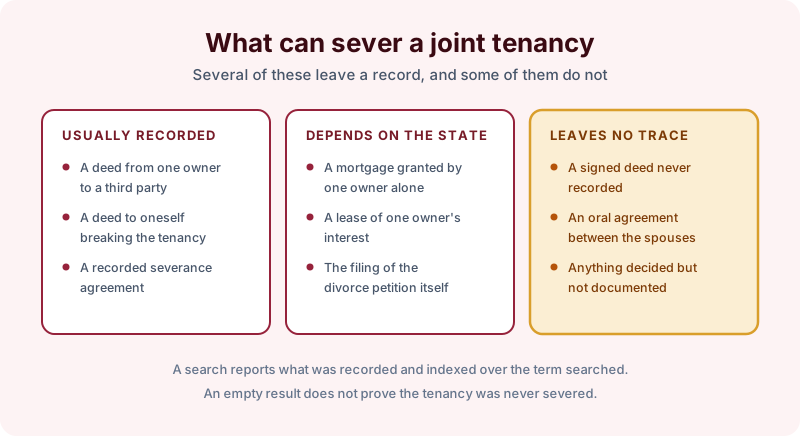
Some acts are recorded and reasonably clear. A deed from one owner to a third party, a deed from an owner to themselves executed to break the tenancy, or a recorded severance agreement all appear in the index.
Others depend entirely on state law. Whether a mortgage granted by one owner alone severs, whether a lease of one interest severs, and whether filing the divorce petition itself has any effect are questions with different answers in different states, and they are not questions an abstractor resolves.
Then there are the acts that leave no trace. A deed signed and never recorded, an oral agreement between the spouses, anything decided in a hallway and never documented. A search reports what was recorded and indexed over the term searched, so finding no severance is not proof the tenancy was never severed. It is the honest limit of the record.
Getting the vesting right before the file closes
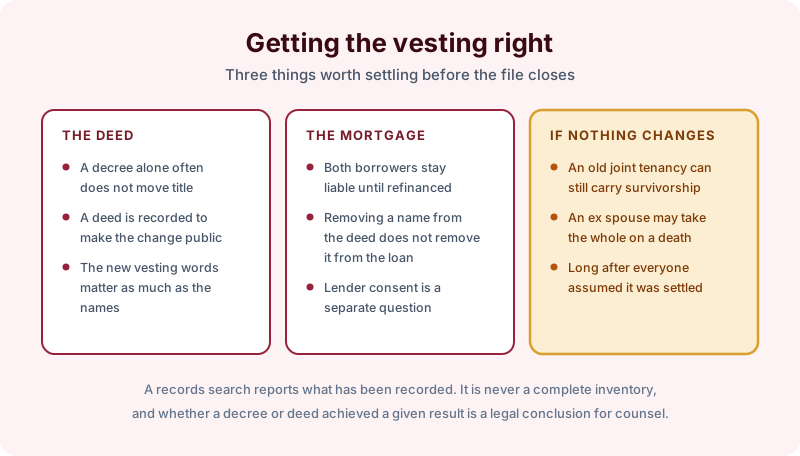
A decree frequently does not move title on its own. In most situations a deed has to be prepared and recorded, and the vesting words on that new deed deserve as much attention as the names. Getting one spouse off the deed while leaving survivorship language in place solves half a problem.
The mortgage is a separate matter again. Removing a name from the deed does nothing to the loan, both borrowers stay liable until it is refinanced, and lender consent is its own conversation. That is the same gap covered in one spouse on the deed and both on the mortgage.
If nothing is recorded at all, the old vesting simply persists. An ex spouse can end up taking the whole property on a death years later, long after everyone involved assumed the matter was closed. Our process starts by confirming what the record currently says, because that is the only reliable starting point.
The takeaway
Read the vesting words on the deed rather than trusting the label, check the whole sequence for anything that severed the tenancy, and record a new deed with the vesting you actually want. A records search shows what is on file and it is never a complete picture, and whether a given deed or decree achieved a particular result is a legal conclusion for counsel. Start the order online, or send us the names and the address and we will tell you what a search of that scope would and would not cover before anything is ordered.