

· AFX Research
Deed Fraud and Forged Transfers During a Divorce Property Search
A recorder accepts a deed without proving the signature is real. What the chain of title can document about a suspect transfer, and where records work stops and counsel takes over.
Table of Contents
One of the uglier things that surfaces in a divorce is a deed nobody expected. The house was jointly held, and now the record shows it conveyed to a cousin, a girlfriend, or a brand new limited liability company, signed by one spouse alone. It may be a forgery, it may be a misuse of an old power of attorney, or it may be something the other side genuinely agreed to and forgot. What settles the question is the recorded paper, which is the same material a search for undisclosed real estate in a divorce is built on.
Why the record accepted it in the first place
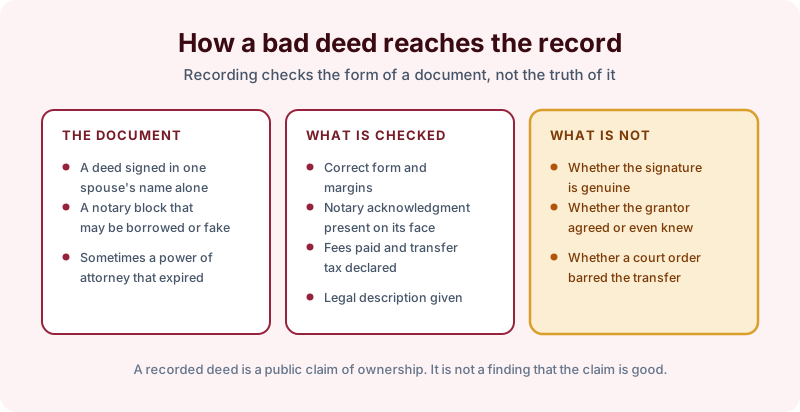
People are often surprised that a deed like this can be recorded at all. A recorder’s office is a filing office, not an adjudicator. Most offices check that the document is in the right form, that a notary acknowledgment appears on its face, that the fees and any transfer tax are handled, and that a legal description is present. That is close to the whole review.
What no filing office checks is whether the signature is genuine, whether the person named as grantor knew about the transfer, or whether a standing court order in a pending case barred it. Recording gives a document public effect and a date. It does not certify that the document is true.
That is worth saying plainly to a client, because a recorded deed showing the house in someone else’s name often lands as though it were final. It is not. It is a claim, entered in a public index, that a court can set aside.
Signals that justify pulling the documents
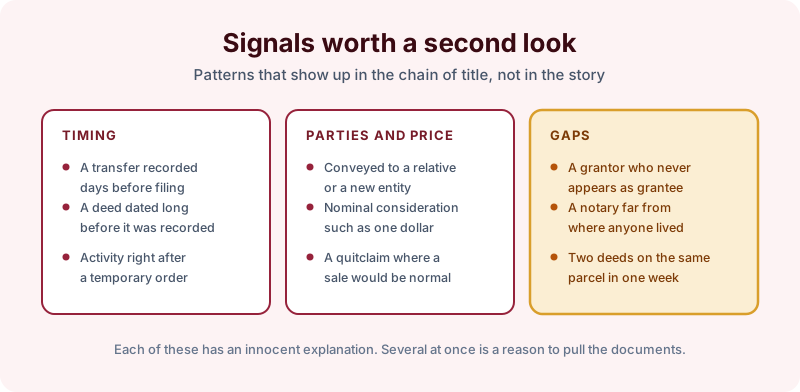
Timing is the first thing to look at. A conveyance recorded in the weeks before a petition was filed, or immediately after a temporary restraining order issued, sits differently from one recorded four years earlier. So does a large gap between the date a deed was signed and the date it reached the recorder.
The parties and the price are the second. Transfers to a relative, to a new entity formed shortly beforehand, or for nominal consideration such as one dollar are all perfectly legal and all worth reading closely. A quitclaim used where an arm’s length sale would be normal is another.
Then there are gaps in the chain itself — a grantor who never appears anywhere as a grantee, a notary acknowledgment taken hundreds of miles from where either party lived, or two deeds recorded on the same parcel within days of each other. Any one of these has an innocent explanation. Several stacked together is a reason to order copies and read them, much as you would when deeds recorded during a separation turn up unexpectedly.
What the search can settle, and what it cannot
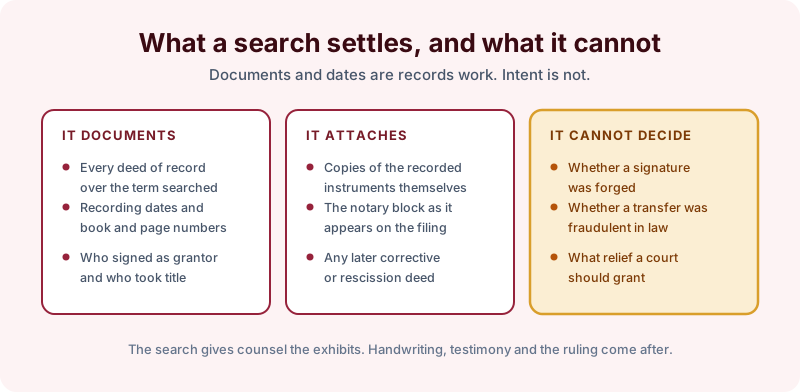
A chain of title search over the parcel documents every deed of record across the term searched, with recording dates, book and page references, and the names as they appear. It attaches copies of the instruments themselves, including the notary block, so both sides are reading the same page rather than describing it. It will also show any later corrective deed, rescission, or affidavit someone filed to clean things up. How far back that chain runs is a scoping decision, and our search products are organized around the terms attorneys ask for most.
What it cannot do is decide the case. Whether a signature is genuine is a question for a document examiner. Whether a transfer was fraudulent as a matter of law, and what should be unwound, belongs to counsel and the court. Our abstractors report what was recorded and found, and a search is never a complete inventory of a person’s holdings. Recording and indexing practice varies by county, so the absence of a filing in one office is not proof that nothing exists elsewhere.
The takeaway
Treat a surprising deed as evidence to be gathered rather than a fact to be accepted. Get the full chain over the parcel, get certified copies of the instruments and their notary blocks, and let counsel decide what the timing and the parties add up to. Start the order online, or send us the names and addresses and we will tell you what a search of that scope would and would not cover before anything is ordered.