

· AFX Research
Contract for Deed Property in a Divorce: What the Record Shows
When a spouse is buying or selling on a land contract, the deed has not moved yet and the interest may not be recorded at all. What a search can and cannot find.
Table of Contents
Land contracts, contracts for deed, and installment sale agreements all do the same thing: the buyer takes possession and pays over time, and the deed does not transfer until the balance is paid. That timing is what makes them difficult in a property division, because the county record describes a state of affairs that does not match reality. This belongs with the wider problem in our note on unrecorded deeds and side agreements, and it is more common than most intake forms assume, particularly on rural property and in seller financed sales.
Two directions, both misleading
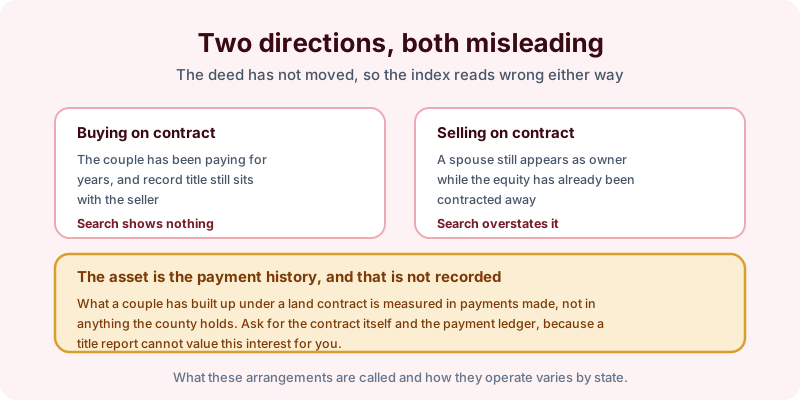
If the couple is buying, they may have lived in the house for eight years and paid most of the price, while record title still sits with the seller. A search of the county under their names returns nothing, and the asset looks like it does not exist, which is why our note on finding undisclosed real estate treats a name search as a starting point rather than an answer.
If the couple is selling, the opposite happens. A spouse still appears as owner of record while the equity has already been contracted away to a buyer who has been paying for years, and a settlement built on the record looks far richer than the facts support.
Either way, what the couple actually holds is measured in payments made, and payments are not recorded anywhere. Ask for the contract and the payment ledger, because a title report cannot value this interest.
What the search will find
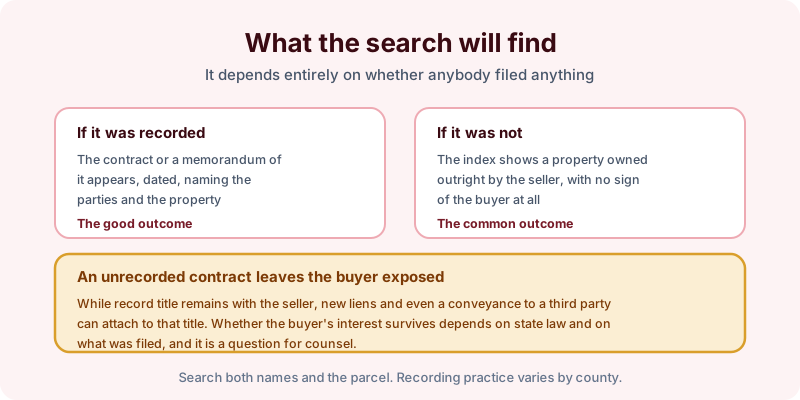
It depends entirely on whether anybody filed anything. Where the contract or a memorandum of it was recorded, the search returns it, dated and naming the parties and the property, and that is the clean outcome. Where nothing was filed, which is the common case, the index shows a property owned outright by the seller with no sign of the buyer at all.
That gap is more than an inconvenience. While record title stays with the seller, new liens against the seller and even a conveyance to a third party can attach to that title. Whether the buyer’s interest survives depends on state law and on what was filed, and it is a question for counsel rather than a records finding. What the search can do is show whether anything has been recorded against that title since the contract was signed, which is often the most urgent question in the file.
The risk while the case is open
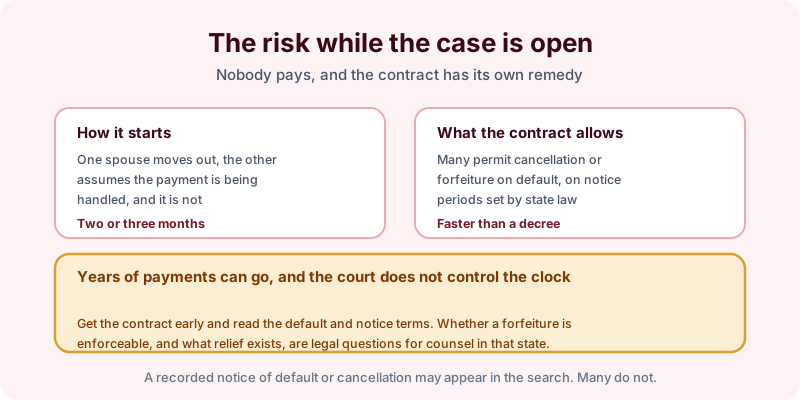
The pattern is predictable. One spouse moves out, the other assumes the payment is being handled, and two or three months go by. Many of these contracts permit cancellation or forfeiture on default, following notice periods set by state law, and those periods are frequently shorter than the time a divorce takes.
So the practical exposure is that years of payments can be lost on a clock nobody in the case controls. Get the contract early and read the default and notice provisions. Whether a forfeiture is enforceable, and what relief might be available, are legal questions for counsel.
What the search will and will not settle
The search reports what was recorded and indexed for the parcels and names given, as of its date, with copies: a recorded contract or memorandum if one exists, the record owner, mortgages and judgments against that owner, tax status, and any recorded notice of default or cancellation.
It cannot show an unrecorded contract, the balance owed, the payments made, or whether notice was properly given. Whether the interest is marital or separate is a legal question that turns on when the contract was signed and how payments were funded, the analysis in our note on marital versus separate property. Recording practice varies by county, so an empty result reflects the record rather than proving no interest exists.
The takeaway
Ask both spouses directly whether any property is being bought or sold on contract, then search the parcel and the other party’s name rather than only your client’s. Our process page explains what happens at intake. Start the order online, or send us the names and addresses and we will tell you what a search of that scope would and would not cover before anything is ordered.