

· AFX Research
Assuming the Mortgage Instead of Refinancing in a Divorce
Keeping the existing loan can beat a new one at today rates, and only a release of liability actually frees the leaving spouse. What the record shows and what it never will.
Table of Contents
One spouse is keeping the house and the settlement says they will refinance. Then the rate on the existing loan turns out to be three percent and the rate on a new one is not, and suddenly everyone is asking whether the loan can simply be taken over instead. That question has a real answer, it depends on documents nobody in the room is holding, and getting it wrong leaves one person legally on the hook for a house they no longer own. It is the other half of refinancing the marital home.
Two routes to one spouse carrying the loan
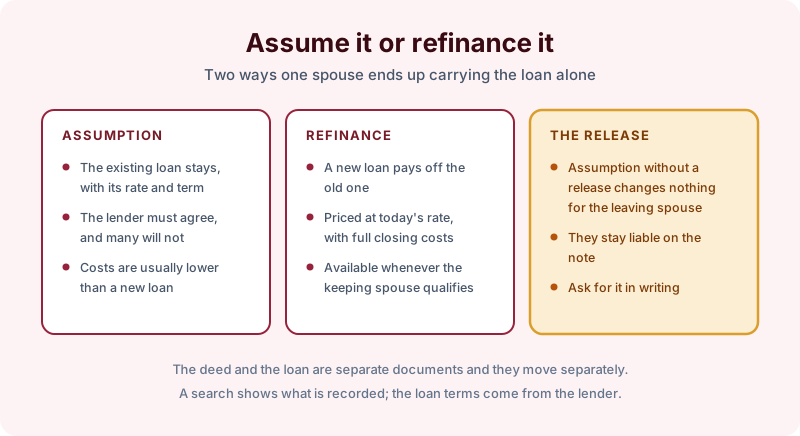
An assumption keeps the existing loan in place, with its rate and its remaining term, and substitutes one borrower for another. The lender has to agree, and costs are usually well below a new loan.
A refinance pays the old loan off with a new one, priced at today’s rate with a full set of closing costs, and it is available whenever the keeping spouse can qualify on their own.
The release of liability is the part that matters most and gets skipped most. An assumption without a written release changes nothing for the departing spouse. They remain liable on the note, a missed payment three years from now lands on their credit, and the debt still counts against them when they try to buy somewhere else. Ask for the release in writing, and read it.
What the county record can and cannot show
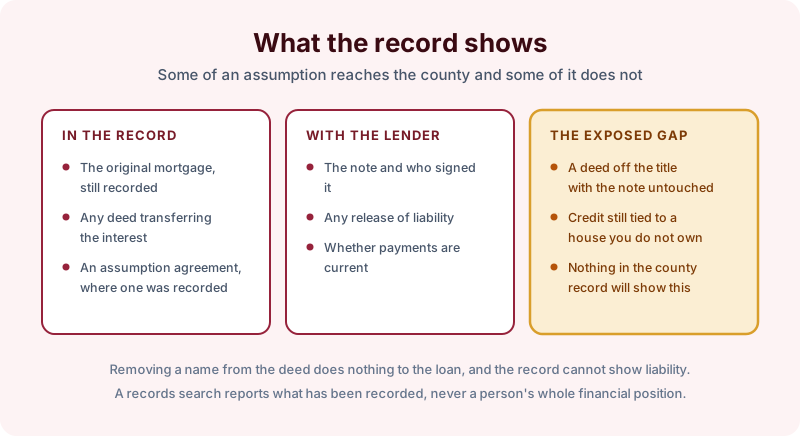
The record shows the original mortgage, still sitting there, along with any deed transferring an interest and an assumption agreement where one was recorded. That is genuinely useful, and it is only the property half.
The note, who signed it, whether a release was granted, and whether payments are current all live with the lender. None of it reaches the recorder.
Which produces the gap. A deed can take one spouse off title while the note stays exactly as it was, and no search of the county record will ever reveal that they are still liable. The deed and the loan are separate documents that move separately, which is the same point at the centre of one spouse on the deed and both on the mortgage.
That asymmetry is worth stating plainly to a client, because it runs against intuition. Signing a quitclaim deed feels like the moment you stop owning the house and therefore stop owing for it. It is only the first of those. The second requires the lender to do something, and lenders do not do it as a courtesy.
Confirm it before the terms are agreed
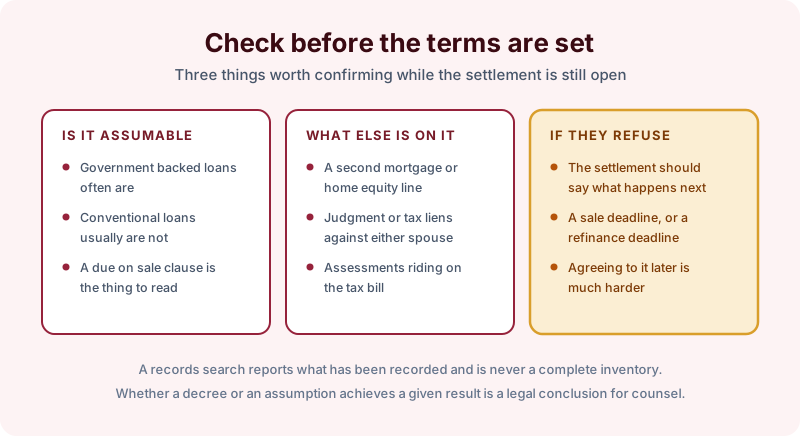
Start with whether the loan is assumable at all. Government backed loans frequently are. Conventional loans usually are not, and the due on sale clause is the provision to read rather than guess at.
Then find out what else is attached to the parcel, because an assumption does nothing about a second mortgage, a home equity line, a judgment lien against either spouse, or an assessment riding on the tax bill. Those are ordinary search findings and they change the arithmetic.
Finally, write down what happens if the lender says no. A settlement that assumes an assumption will be approved, with no fallback, turns into a second negotiation at the worst possible moment. A sale deadline or a refinance deadline agreed now is far easier than agreeing one later. Our process starts by establishing what the record currently says.
The takeaway
An assumption can be the better deal and it only works if the lender agrees and the departing spouse gets a written release. Confirm the loan is assumable, search the parcel for everything else attached to it, and put a fallback in the settlement. Whether any particular arrangement achieves what the parties intend is a legal conclusion for counsel. Start the order online, or send us the address and the names and we will tell you what a search of that scope would and would not cover before anything is ordered.